Modern Platform Engineering for AI-First Enterprises
Platform Engineering has evolved into one of the most critical operational disciplines for AI-first enterprises in 2026. As organizations deploy increasingly complex AI systems, distributed cloud infrastructure, Kubernetes workloads, autonomous agents, and large-scale developer environments, traditional DevOps practices alone are no longer sufficient.
Modern enterprises require scalable internal developer platforms, standardized infrastructure patterns, secure deployment pipelines, automated governance systems, and self-service operational tooling. Platform Engineering provides the architectural framework that enables these capabilities at enterprise scale.
Strategic Insight
The highest-performing AI-first enterprises no longer treat infrastructure as a collection of isolated DevOps pipelines. They treat infrastructure as a product — designed, governed, standardized, and optimized for developer velocity and operational resilience.
Why Platform Engineering Matters in 2026
The explosion of AI workloads has dramatically increased operational complexity across enterprise environments. Organizations now manage:
- Distributed GPU infrastructure
- Multi-cloud AI environments
- LLMOps deployment pipelines
- Kubernetes orchestration layers
- Internal AI tooling ecosystems
- Autonomous AI agents
- Security governance controls
- Data infrastructure dependencies
Without standardized platform engineering practices, operational fragmentation quickly becomes a bottleneck for scalability, compliance, reliability, and developer productivity.
Developer Velocity
Accelerate deployment cycles through self-service infrastructure and standardized workflows.
Operational Consistency
Reduce infrastructure drift through reusable platform templates and automation.
Security Governance
Embed security and compliance policies directly into deployment platforms.
What Is Modern Platform Engineering?
Platform Engineering is the discipline of designing and operating internal platforms that abstract infrastructure complexity for developers while enforcing operational standards, governance policies, and scalability requirements.
Internal Developer Platforms (IDPs)
At the center of Platform Engineering is the Internal Developer Platform. These systems provide:
- Self-service infrastructure provisioning
- Automated deployment pipelines
- Standardized Kubernetes environments
- Infrastructure templates
- Integrated observability tooling
- Security automation
- AI deployment workflows
Rather than forcing developers to manually manage infrastructure complexity, the platform abstracts operational concerns into reusable services and workflows.
Platform Engineering vs Traditional DevOps
| Traditional DevOps | Platform Engineering |
|---|---|
| Team-specific pipelines | Organization-wide reusable platforms |
| Infrastructure managed manually | Infrastructure delivered as self-service products |
| Limited standardization | Strong operational governance |
| Reactive operations | Proactive platform optimization |
Core Components of Enterprise Platform Engineering
1. Kubernetes Platform Standardization
Kubernetes remains the dominant orchestration layer for enterprise infrastructure in 2026. However, unmanaged Kubernetes environments quickly become operationally expensive.
Platform teams standardize Kubernetes through:
- Golden cluster templates
- Policy-as-code governance
- Namespace isolation standards
- Service mesh integration
- Unified ingress management
- Centralized secrets management
- Automated scaling frameworks
Enterprise AI environments frequently operate hundreds of Kubernetes clusters across hybrid and multi-cloud environments. Standardization becomes essential for governance and reliability.
2. AI Infrastructure Abstraction
AI-first organizations require specialized infrastructure capabilities including:
- GPU orchestration
- Model serving infrastructure
- Vector databases
- Inference optimization
- LLM gateway management
- AI workload scheduling
- Distributed training environments
Platform Engineering enables AI teams to consume these capabilities through unified interfaces without managing underlying infrastructure directly.
3. Developer Experience Engineering
Developer Experience (DX) has become a measurable enterprise priority. Modern platforms optimize:
Self-Service Deployments
Enable developers to provision infrastructure without operational bottlenecks.
Golden Paths
Provide approved deployment patterns that reduce architectural inconsistency.
Integrated Toolchains
Centralize CI/CD, observability, security, and AI tooling workflows.
Enterprise Architecture Perspective
From an enterprise architecture perspective, Platform Engineering fundamentally changes how organizations think about infrastructure ownership and operational scalability.
Rather than distributing operational responsibilities across fragmented engineering teams, enterprises centralize foundational infrastructure capabilities into reusable platform services.
Key Architectural Principles
- Infrastructure as a Product
- Self-Service Platform Consumption
- Policy-Driven Governance
- Observability-First Operations
- Immutable Infrastructure Patterns
- Centralized Security Enforcement
- Reusable Deployment Standards
Platform Engineering for AI Workloads
Managing AI Complexity
AI systems introduce operational challenges beyond traditional application deployment:
- Massive compute requirements
- Dynamic scaling behavior
- High-cost GPU utilization
- Model version governance
- Inference latency optimization
- Data pipeline dependencies
- Regulatory compliance controls
Platform Engineering introduces standardized operational patterns that reduce this complexity while enabling faster AI innovation cycles.
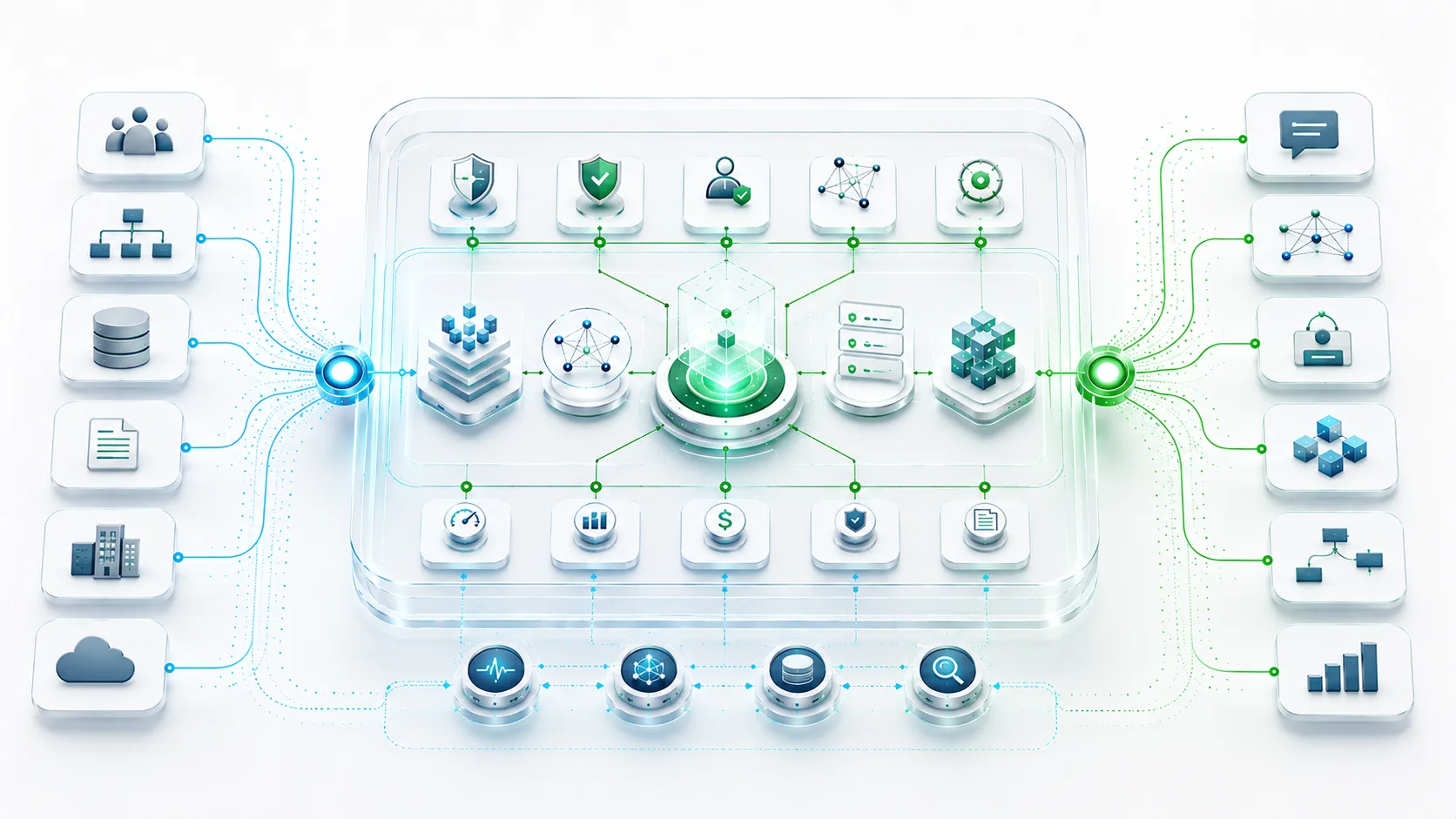
AI Platform Layers
- Infrastructure Layer: Compute, storage, networking, GPU orchestration
- Platform Layer: Kubernetes, CI/CD, observability, security automation
- AI Operations Layer: Model serving, feature stores, vector databases
- Developer Layer: APIs, deployment templates, self-service tooling
- Governance Layer: Policy enforcement, compliance auditing, risk controls
Implementation Checklist
Enterprise Platform Engineering Checklist
- Define platform ownership structure
- Establish infrastructure standards
- Implement policy-as-code frameworks
- Standardize Kubernetes deployment models
- Deploy centralized observability systems
- Create reusable infrastructure templates
- Implement secrets management architecture
- Build self-service developer portals
- Integrate AI deployment workflows
- Automate compliance auditing
- Optimize GPU utilization governance
- Establish platform SLOs and SLAs
Common Mistakes Enterprises Make
Treating Platforms as Internal IT Projects
Internal platforms must be treated as products with roadmap ownership, user feedback loops, and measurable outcomes.
Ignoring Developer Experience
Overly rigid governance models create friction that slows adoption and drives shadow infrastructure usage.
Lack of Operational Observability
Without centralized observability, platform teams lose visibility into infrastructure reliability, AI workloads, and deployment performance.
The most successful platform engineering organizations balance governance with developer autonomy. Excessive control creates operational resistance.
Key Takeaways
Infrastructure as a Product
Platform Engineering transforms infrastructure into reusable enterprise products.
AI Scalability
AI-first enterprises require standardized infrastructure operations to scale reliably.
Developer Productivity
Internal developer platforms dramatically improve engineering velocity and consistency.
How YggyTech Helps
YggyTech partners with enterprises to design, modernize, and scale Platform Engineering ecosystems optimized for AI-first operations.
Our teams help organizations build:
- Internal developer platforms
- Enterprise Kubernetes architectures
- AI infrastructure automation
- Cloud-native operational frameworks
- DevSecOps governance systems
- Observability and reliability platforms
- LLMOps deployment pipelines
- Enterprise AI platform modernization strategies
Build Enterprise-Grade Platform Engineering Systems
YggyTech helps enterprises architect scalable internal platforms, optimize AI infrastructure operations, and accelerate secure developer workflows for modern cloud-native environments.
Schedule a Platform Engineering ConsultationFAQs
What is Platform Engineering?
Platform Engineering is the practice of building internal platforms that standardize infrastructure operations, improve developer experience, and automate enterprise deployment workflows.
Why is Platform Engineering important for AI-first enterprises?
AI-first organizations require scalable operational frameworks capable of managing GPU infrastructure, AI deployment pipelines, governance systems, and distributed cloud architectures efficiently.
How does Platform Engineering improve developer productivity?
Platform Engineering provides self-service tooling, reusable infrastructure templates, automated deployments, and standardized workflows that reduce operational friction for engineering teams.
What technologies are commonly used in Platform Engineering?
Common technologies include Kubernetes, Terraform, GitOps frameworks, service meshes, observability platforms, CI/CD systems, secrets management tools, and cloud-native infrastructure platforms.
How does YggyTech support enterprise Platform Engineering initiatives?
YggyTech helps enterprises design scalable platform architectures, modernize cloud infrastructure, implement AI operational systems, and optimize developer experience through enterprise-grade engineering frameworks.

Mason Carter
Cloud & Infrastructure Engineer
Mason focuses on scalable cloud ecosystems, DevOps modernization, and secure distributed infrastructure. His insights at YGGY Tech explore resilient architecture design, Kubernetes operations, cybersecurity strategy, and enterprise scalability.