LET'S TALK

THE YGGY TECH
JOURNAL

Deep dives into digital architecture, algorithmic evolution, and the industrial impact of synthetic intelligence. Curated for the modern engineer.

AI Operations Centers (AIOCs): The Next Evolution of Enterprise Command Centers
Enterprise AI Operations

AI OPERATIONS CENTERS (AIOCS): THE NEXT EVOLUTION OF ENTERPRISE COMMAND CENTERS

AI Operations Centers combine enterprise observability, AI agents, automation, governance, and real-time decision intelligence into a unified command environment. Learn how organizations can design an AIOC architecture that moves operations from fragmented monitoring and reactive escalation toward coordinated, predictive, and increasingly autonomous execution.

Sarah Anderson
Sarah Anderson
19 Minutes
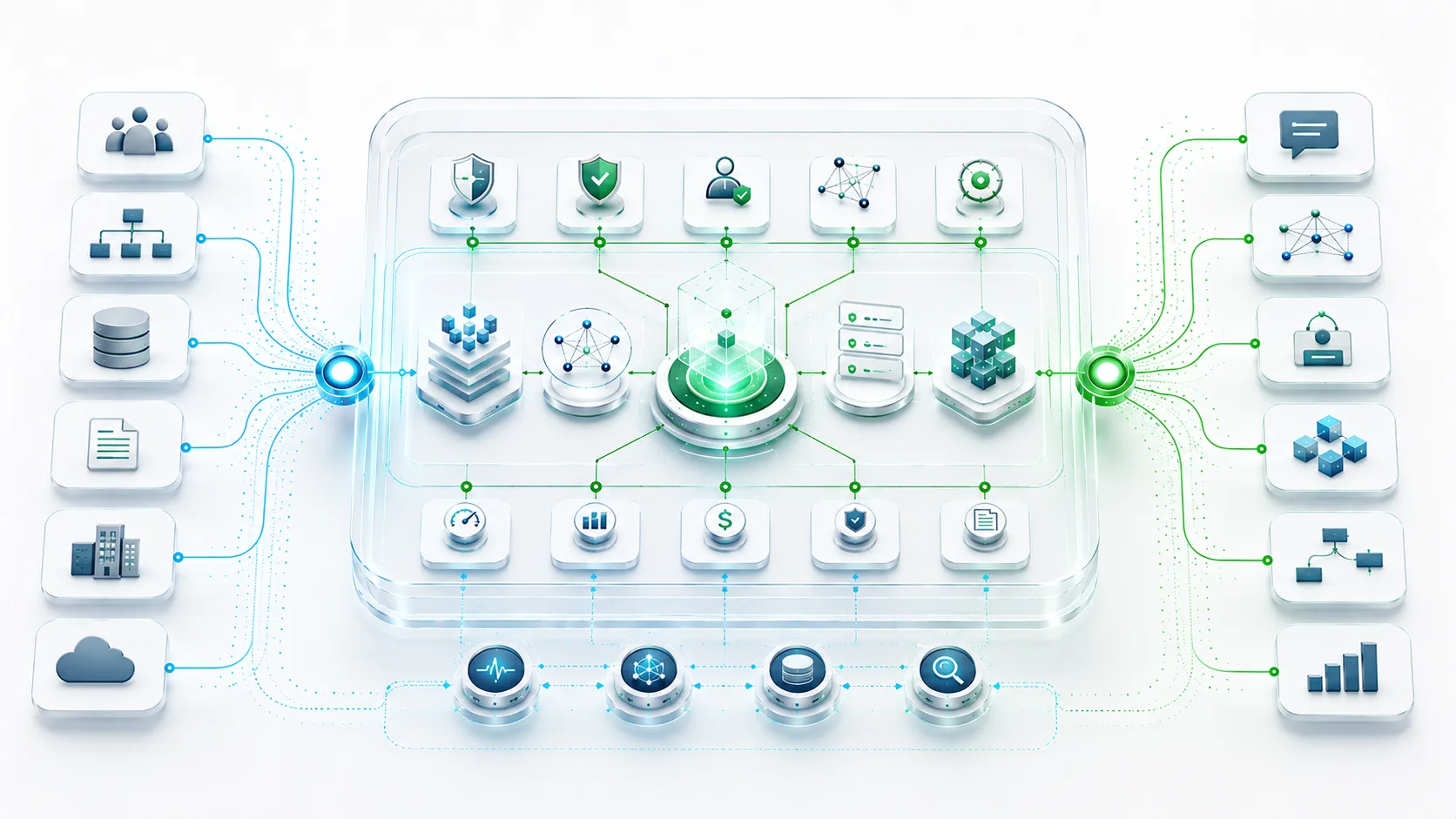
AI Context Mesh Architecture: Synchronizing Enterprise Knowledge Across Distributed AI Systems
Enterprise AI Architecture

AI CONTEXT MESH ARCHITECTURE: SYNCHRONIZING ENTERPRISE KNOWLEDGE ACROSS DISTRIBUTED AI SYSTEMS

AI context mesh architecture provides a governed, distributed framework for synchronizing enterprise knowledge across AI agents, applications, models, and data environments. Learn how enterprises can design reusable context services, semantic routing, policy enforcement, lineage, freshness controls, and observability for scalable AI systems.

Maheer Alishba
Maheer Alishba
18 Minutes
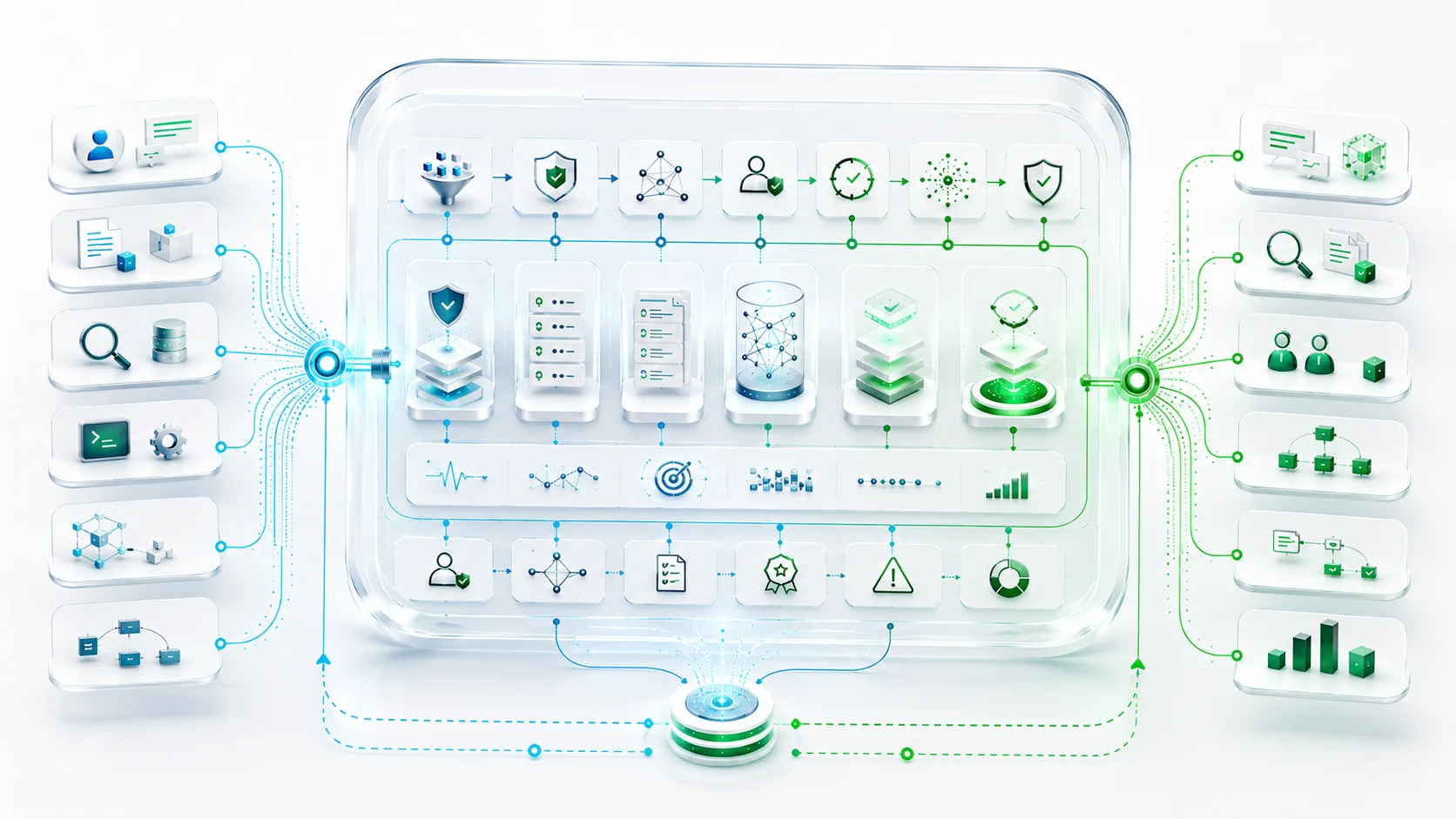
AI Control Plane Architecture: The Enterprise Operating Layer for Governed, Scalable AI Systems
Enterprise AI Architecture

AI CONTROL PLANE ARCHITECTURE: THE ENTERPRISE OPERATING LAYER FOR GOVERNED, SCALABLE AI SYSTEMS

As enterprises deploy multiple AI models, agents, retrieval systems, and business workflows, governance and operational complexity increase rapidly. This article explores how AI control plane architecture provides the centralized operating layer needed to orchestrate, secure, monitor, and scale production AI across the enterprise.

Mason Carter
Mason Carter
14 Minutes
AI Runtime Security: How Enterprises Protect AI Systems During Live Production Operations
AI Enterprise Security

AI RUNTIME SECURITY: HOW ENTERPRISES PROTECT AI SYSTEMS DURING LIVE PRODUCTION OPERATIONS

AI security does not end at deployment. Production AI systems face continuous threats including prompt injection, data leakage, unauthorized tool use, retrieval manipulation, and agent abuse. This article explains how enterprises implement AI runtime security to detect, prevent, and respond to threats while maintaining trust, governance, and operational resilience.

Ethan Brooks
Ethan Brooks
15 Minutes
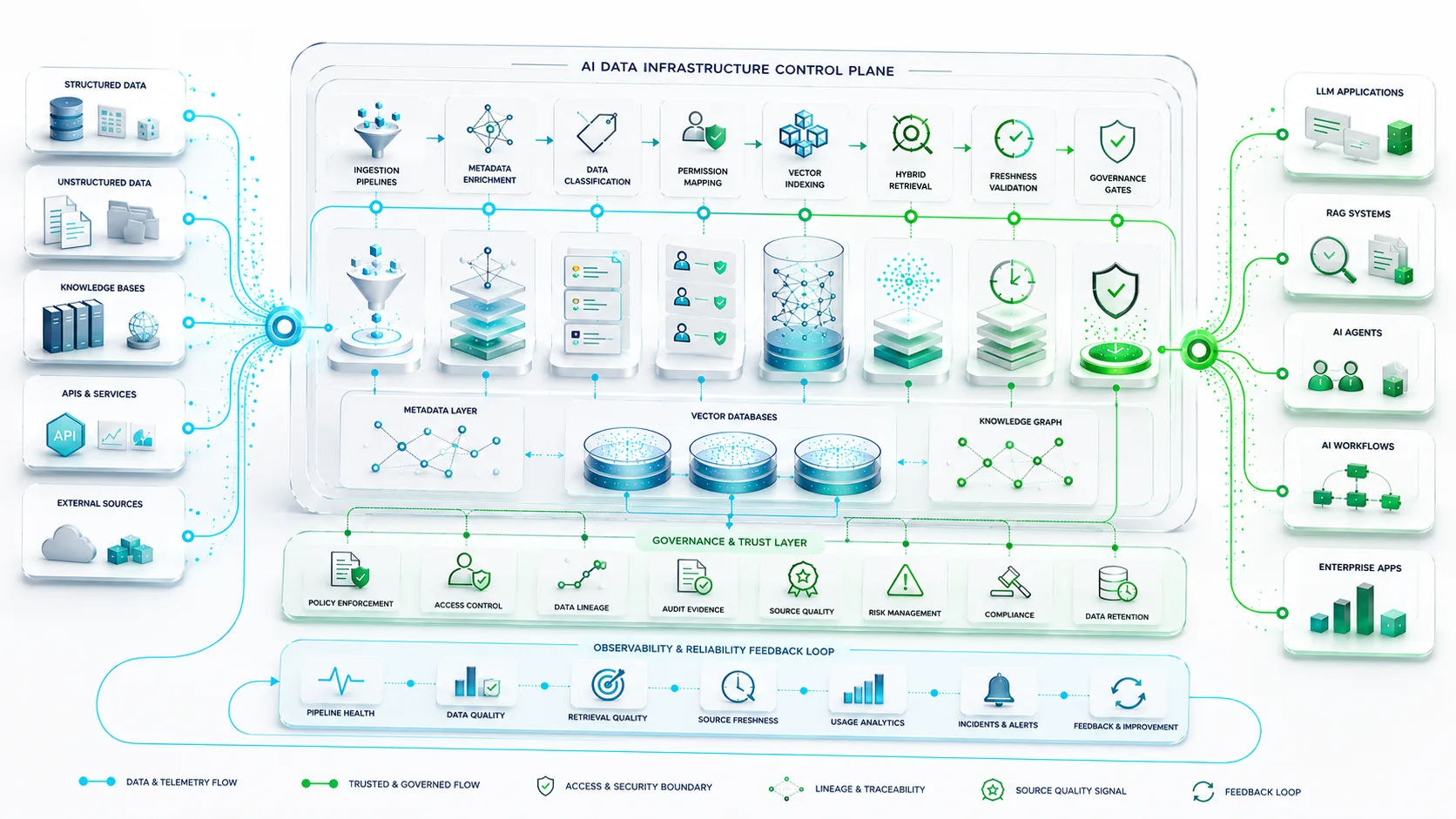
Enterprise AI Data Infrastructure: How Organizations Build Trusted Data Foundations for Production AI
Enterprise AI Infrastructure

ENTERPRISE AI DATA INFRASTRUCTURE: HOW ORGANIZATIONS BUILD TRUSTED DATA FOUNDATIONS FOR PRODUCTION AI

Enterprise AI data infrastructure is the foundation that determines whether production AI systems can retrieve trusted context, respect access controls, scale across business units, and operate reliably. This article explains how organizations can build governed, secure, observable, and AI-ready data foundations for LLM applications, RAG systems, AI agents, and enterprise AI workflows.

Sarah Anderson
Sarah Anderson
16 Minutes
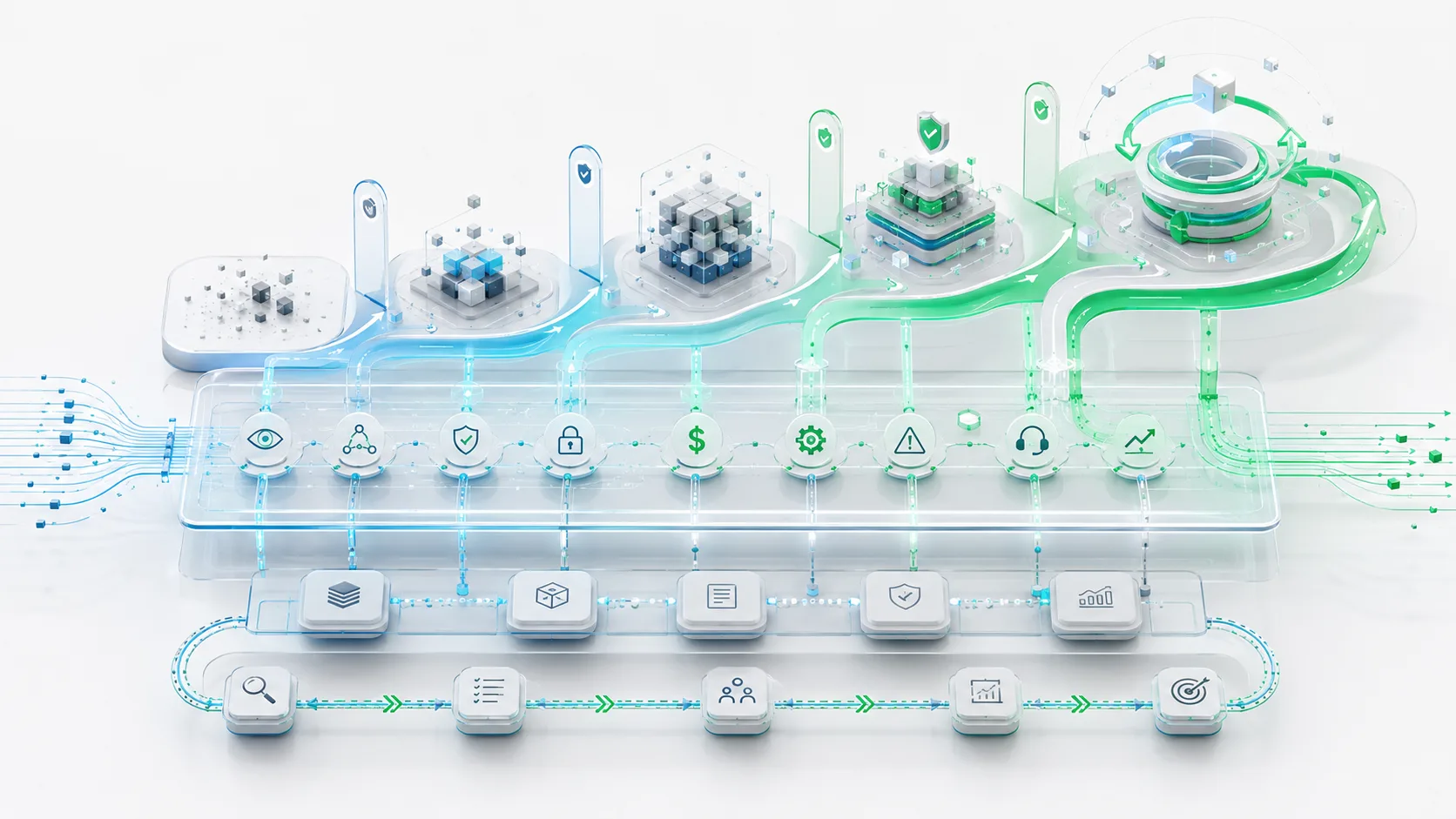
AI Operations Maturity Model: How Enterprises Scale Reliable, Governed, Production-Ready AI
AI Operations

AI OPERATIONS MATURITY MODEL: HOW ENTERPRISES SCALE RELIABLE, GOVERNED, PRODUCTION-READY AI

An AI operations maturity model helps enterprises understand how ready they are to run AI systems reliably in production. This article explains how organizations can progress from experimental AI deployments to governed, observable, secure, cost-controlled, and continuously improving production AI operations.

Sarah Anderson
Sarah Anderson
16 Minutes
AI Operations Runbooks: How Enterprises Standardize Reliability, Escalation, and Continuous Improvement for Production AI
AI Operations

AI OPERATIONS RUNBOOKS: HOW ENTERPRISES STANDARDIZE RELIABILITY, ESCALATION, AND CONTINUOUS IMPROVEMENT FOR PRODUCTION AI

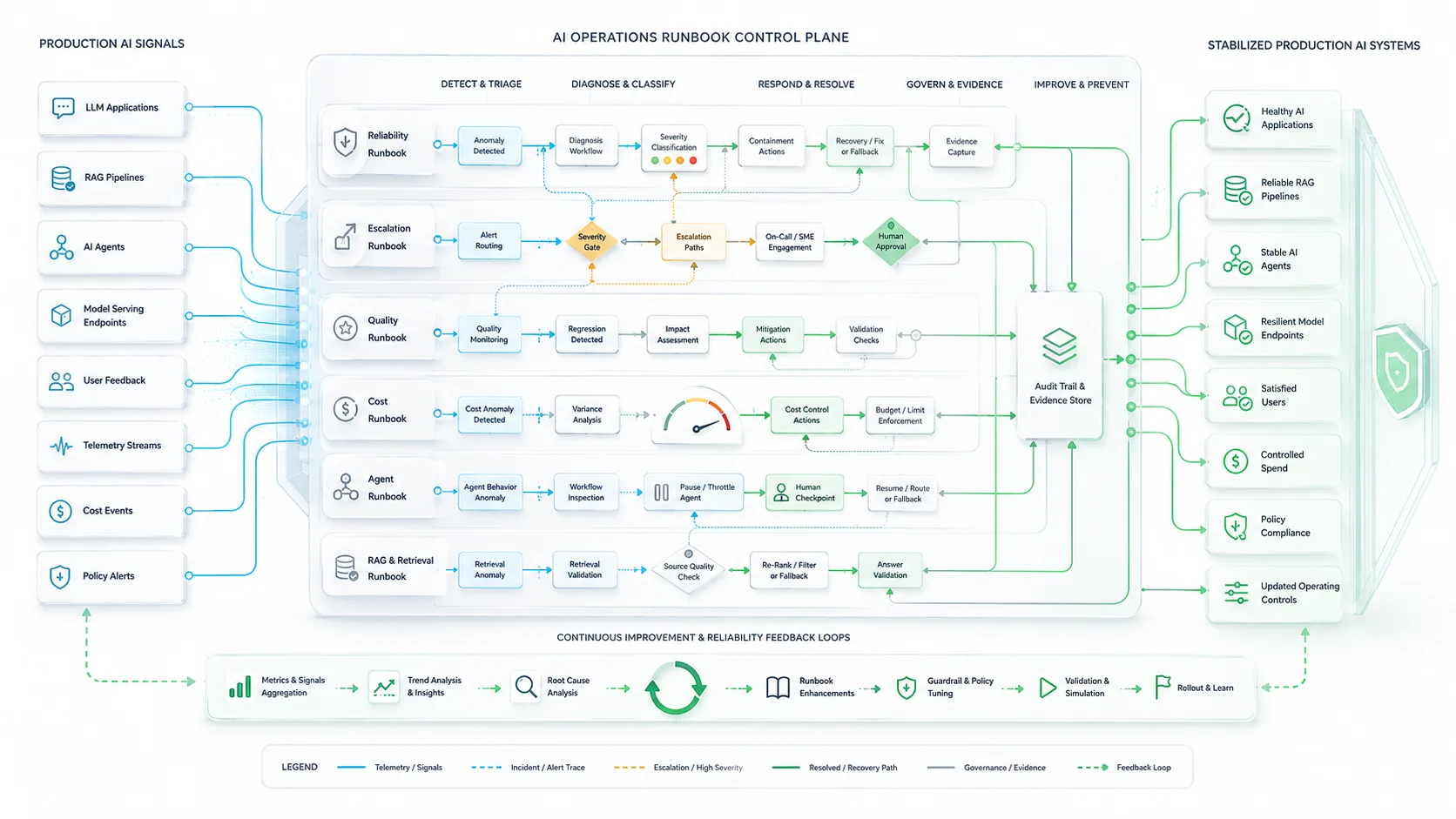
AI operations runbooks give enterprises a repeatable operating model for managing production AI reliability, quality, cost, incidents, escalation, governance, and continuous improvement. This article explains how organizations can standardize production AI operations across LLM applications, RAG systems, AI agents, model serving, observability signals, and business workflows.

Ava Mitchell
Ava Mitchell
16 Minutes
Enterprise AI Reference Architecture: How Organizations Design Governed, Scalable, Production-Ready AI Systems
Enterprise AI Architecture

ENTERPRISE AI REFERENCE ARCHITECTURE: HOW ORGANIZATIONS DESIGN GOVERNED, SCALABLE, PRODUCTION-READY AI SYSTEMS

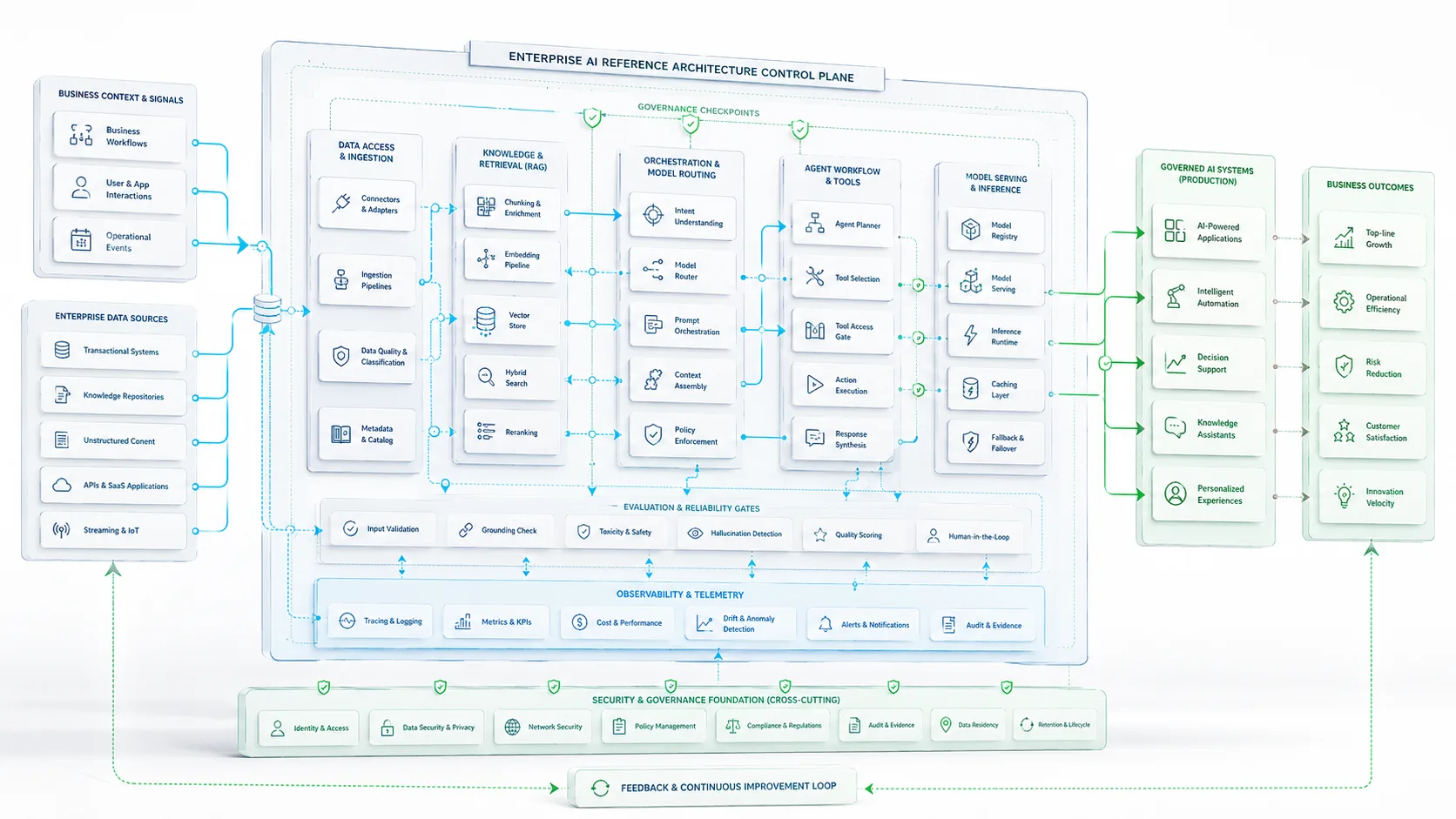
Enterprise AI reference architecture gives organizations a structured blueprint for designing governed, scalable, secure, observable, and production-ready AI systems. This article explains how enterprises can connect business use cases, data platforms, LLMs, RAG pipelines, AI agents, model serving, security, governance, observability, and operations into one coherent AI architecture.

Maheer Alishba
Maheer Alishba
16 Minutes
AI Inference Infrastructure: How Enterprises Scale Low-Latency, Cost-Efficient Production AI
AI Infrastructure

AI INFERENCE INFRASTRUCTURE: HOW ENTERPRISES SCALE LOW-LATENCY, COST-EFFICIENT PRODUCTION AI

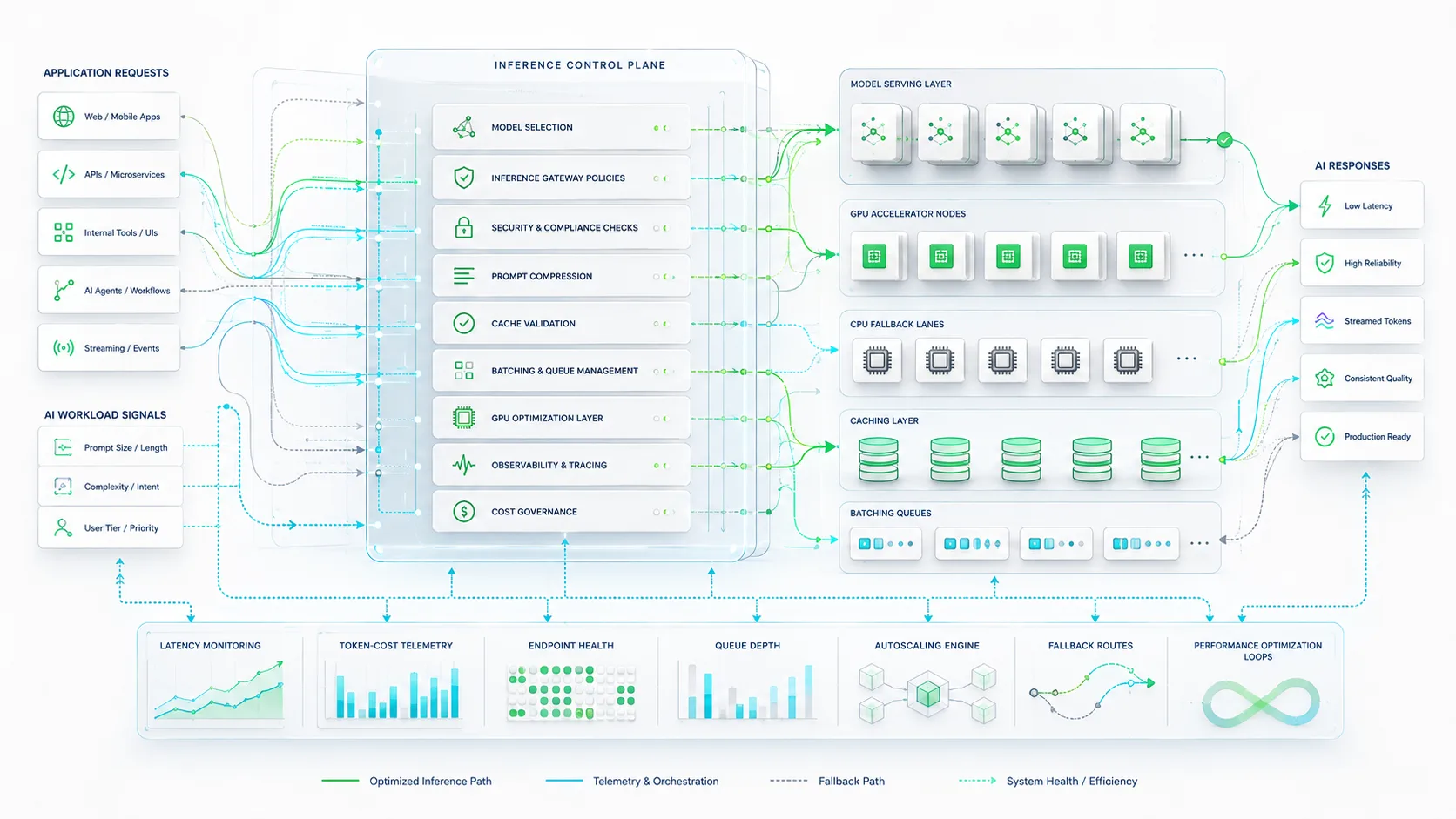
AI inference infrastructure is the production architecture that allows enterprises to serve AI models with low latency, predictable cost, reliable performance, and operational control. This article explains how organizations can scale model serving, optimize inference workloads, manage GPUs, route requests, control token costs, and build resilient AI systems for enterprise production environments.

Ethan Brooks
Ethan Brooks
12 Minutes
Agent Identity and Access Management: The Enterprise Security Layer for Autonomous AI Systems
AI Enterprise Security

AGENT IDENTITY AND ACCESS MANAGEMENT: THE ENTERPRISE SECURITY LAYER FOR AUTONOMOUS AI SYSTEMS

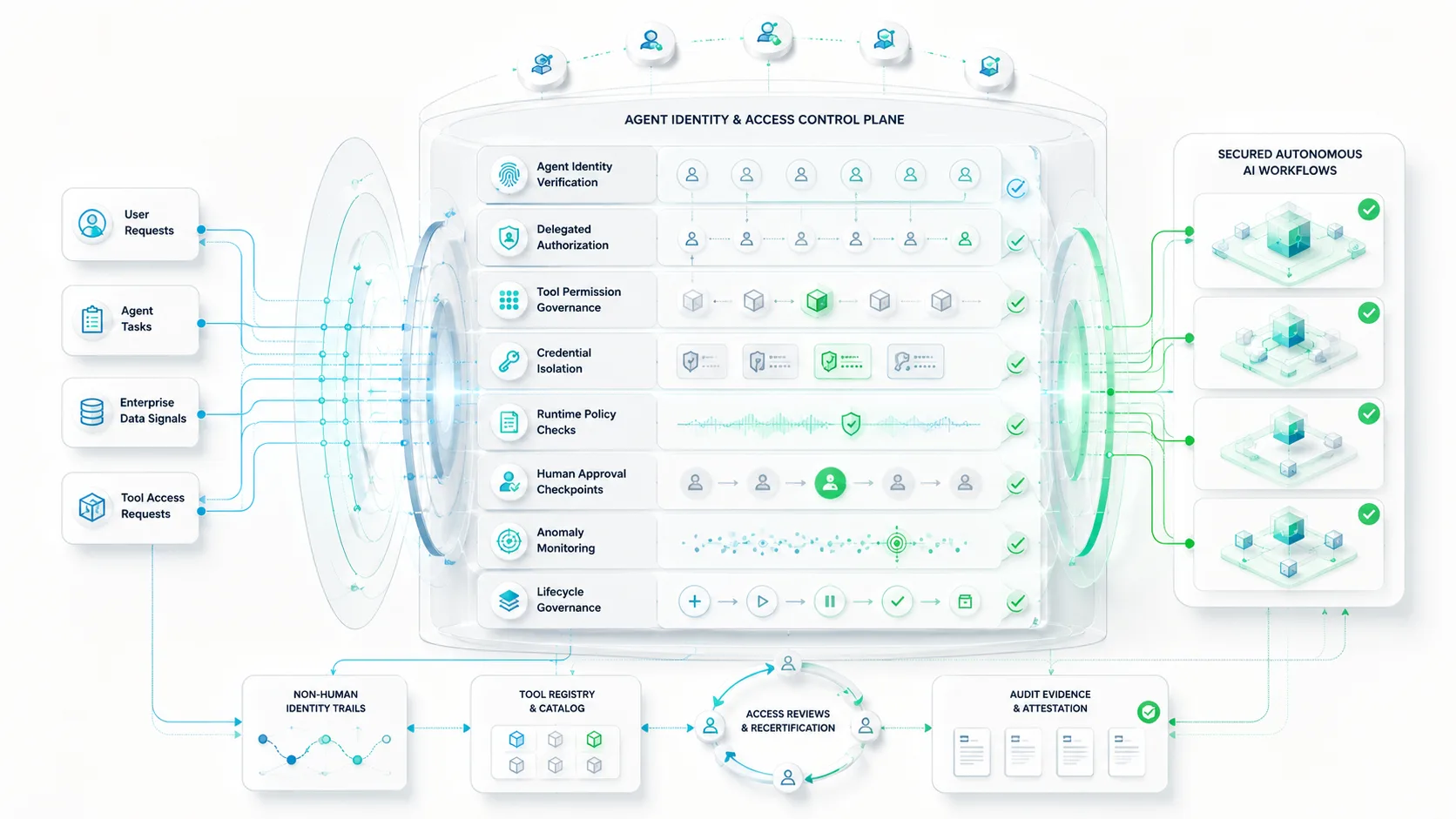
Agent identity and access management gives enterprises the security architecture required to control AI agents, non-human identities, tool permissions, workflow access, credentials, approvals, audit trails, and autonomous actions. This article explains how organizations can secure AI agents before they become uncontrolled enterprise access points.

Liam Walker
Liam Walker
15 Minutes
AI Security Operations: How Enterprises Detect, Investigate, and Respond to AI Threats in Production
AI Enterprise Security

AI SECURITY OPERATIONS: HOW ENTERPRISES DETECT, INVESTIGATE, AND RESPOND TO AI THREATS IN PRODUCTION

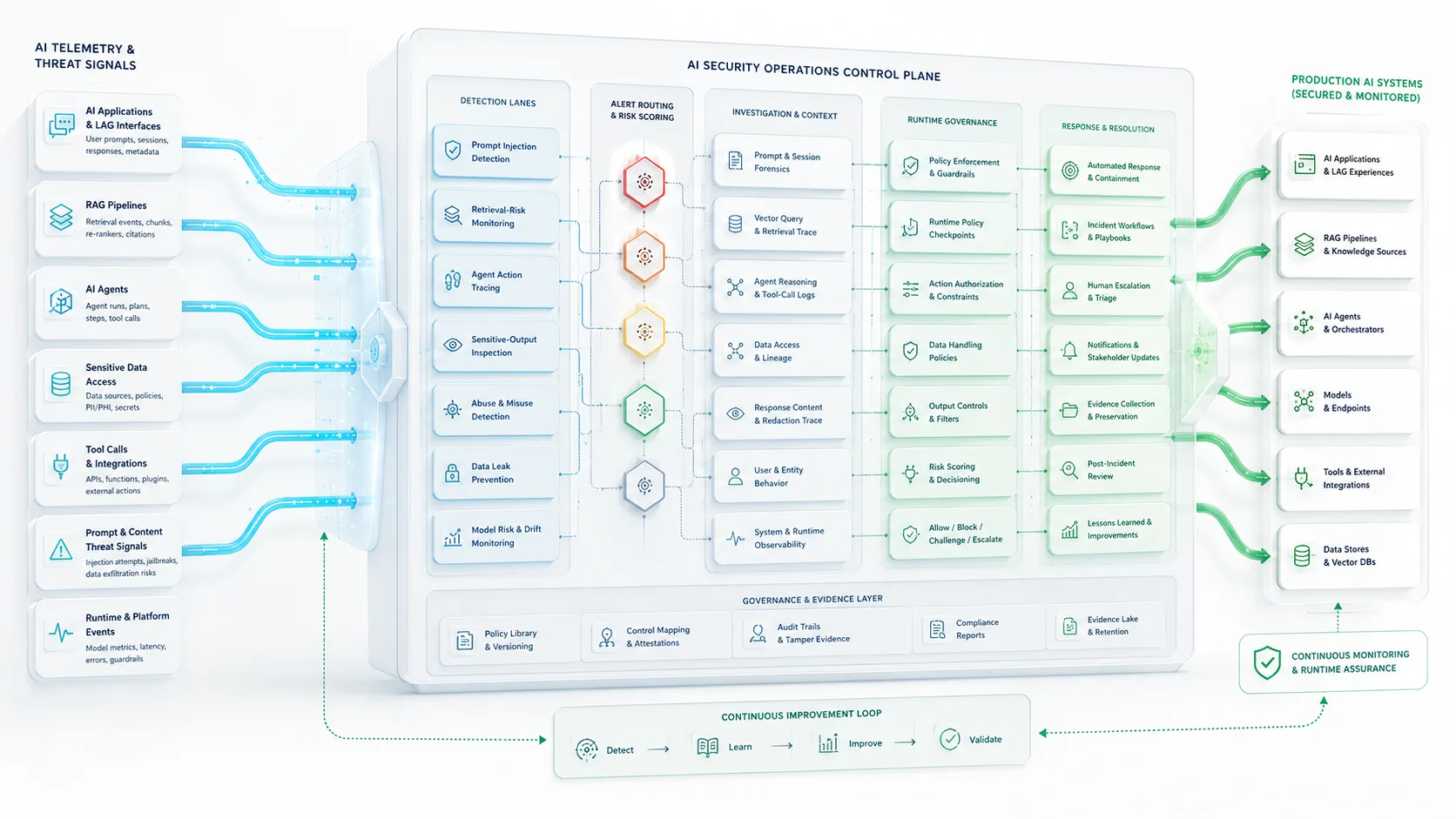
AI security operations gives enterprises the operating model required to detect, investigate, respond to, and continuously reduce risks across production AI systems. This article explains how organizations can secure LLMs, RAG pipelines, AI agents, sensitive data, tool calls, observability signals, and AI incident response workflows at enterprise scale.

Mason Carter
Mason Carter
15 Minutes
Enterprise AI Security: How Organizations Protect AI Systems, Data, and Autonomous Workflows at Scale
Enterprise AI Security

ENTERPRISE AI SECURITY: HOW ORGANIZATIONS PROTECT AI SYSTEMS, DATA, AND AUTONOMOUS WORKFLOWS AT SCALE

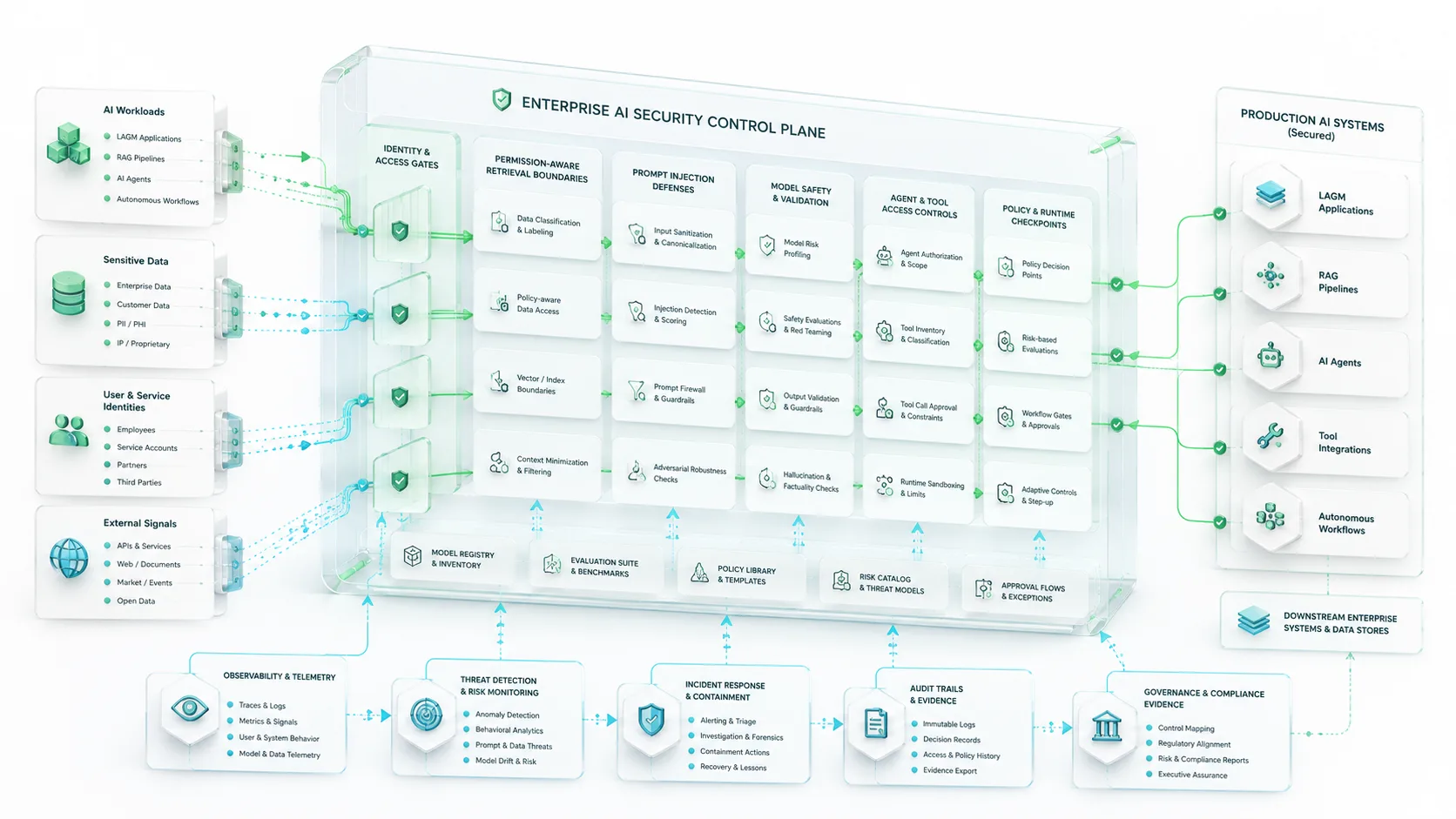
Enterprise AI security helps organizations protect AI systems, sensitive data, models, prompts, agents, tools, workflows, and production infrastructure from emerging risks. This article explains how enterprises can design AI security architecture across governance, identity, data protection, LLM security, agent controls, observability, DevSecOps, and operational resilience.

Sarah Anderson
Sarah Anderson
15 Minutes