AI Control Plane Architecture: The Enterprise Operating Layer for Governed, Scalable AI Systems
Enterprise AI is rapidly becoming a distributed ecosystem of models, agents, retrieval systems, workflows, APIs, and governance requirements. Without a centralized operating layer, organizations struggle to maintain visibility, control, security, and consistency. AI control plane architecture provides the foundation for governing and scaling AI across the enterprise.
Why Enterprise AI Needs a Control Plane
Most organizations begin their AI journey with isolated pilots. Individual teams deploy chatbots, build retrieval systems, launch AI assistants, and experiment with autonomous agents. Over time, these initiatives multiply across departments, creating operational complexity that becomes difficult to govern.
The challenge is not simply managing models. Enterprises must coordinate policies, security controls, identity systems, data access permissions, observability platforms, agent workflows, compliance requirements, and operational standards across dozens or hundreds of AI-powered systems.
Key Insight
The more AI systems an organization deploys, the more important centralized governance, orchestration, and operational control become.
What Is an AI Control Plane?
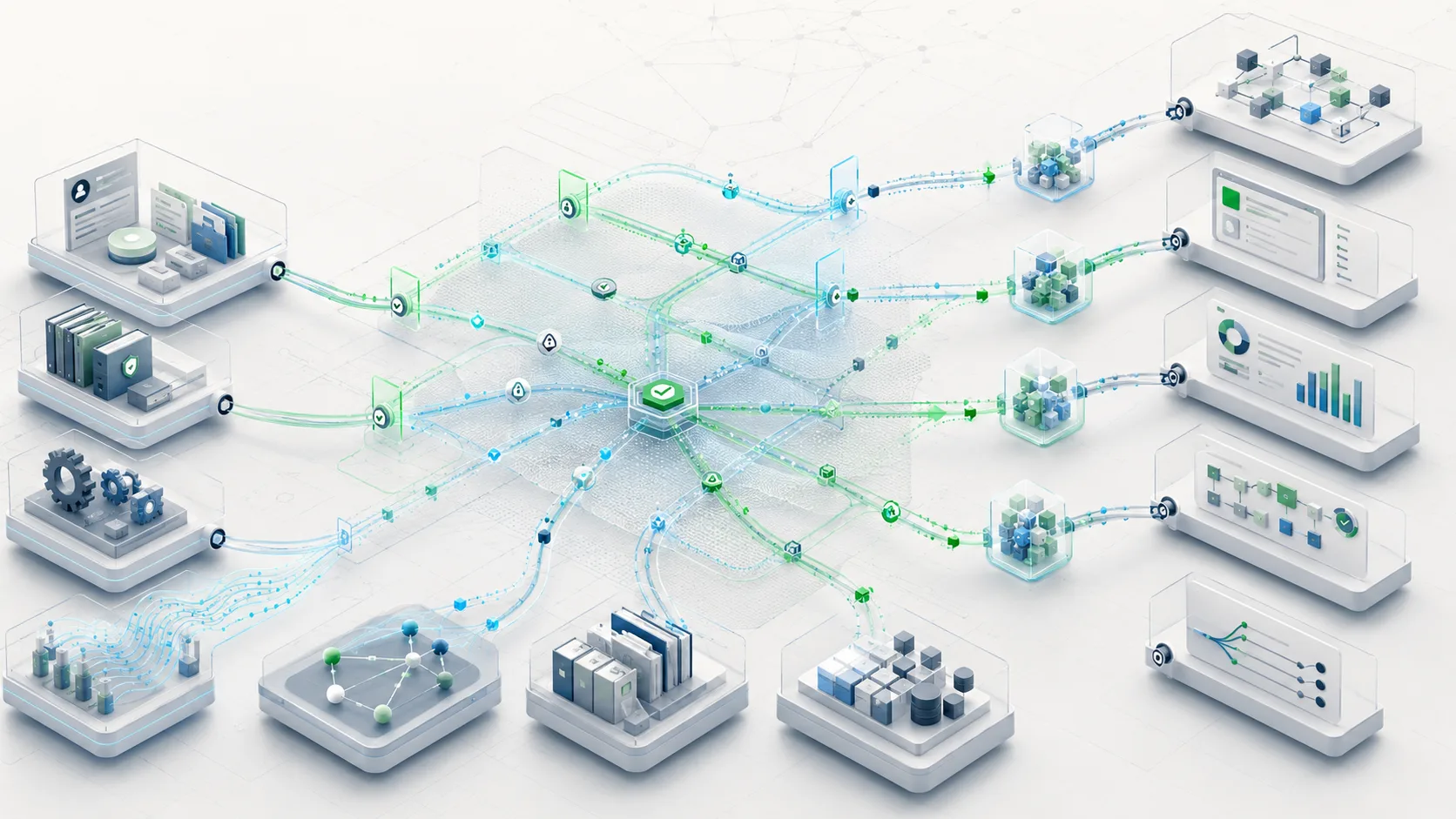
An AI control plane is the centralized operating layer responsible for governing how AI systems are deployed, managed, monitored, secured, and optimized across the enterprise.
Rather than performing inference itself, the control plane coordinates the services that enable production AI systems to operate safely and efficiently. It acts as the orchestration layer between business applications and underlying AI infrastructure.
Execution planes generate AI outcomes. Control planes govern how those outcomes are produced.
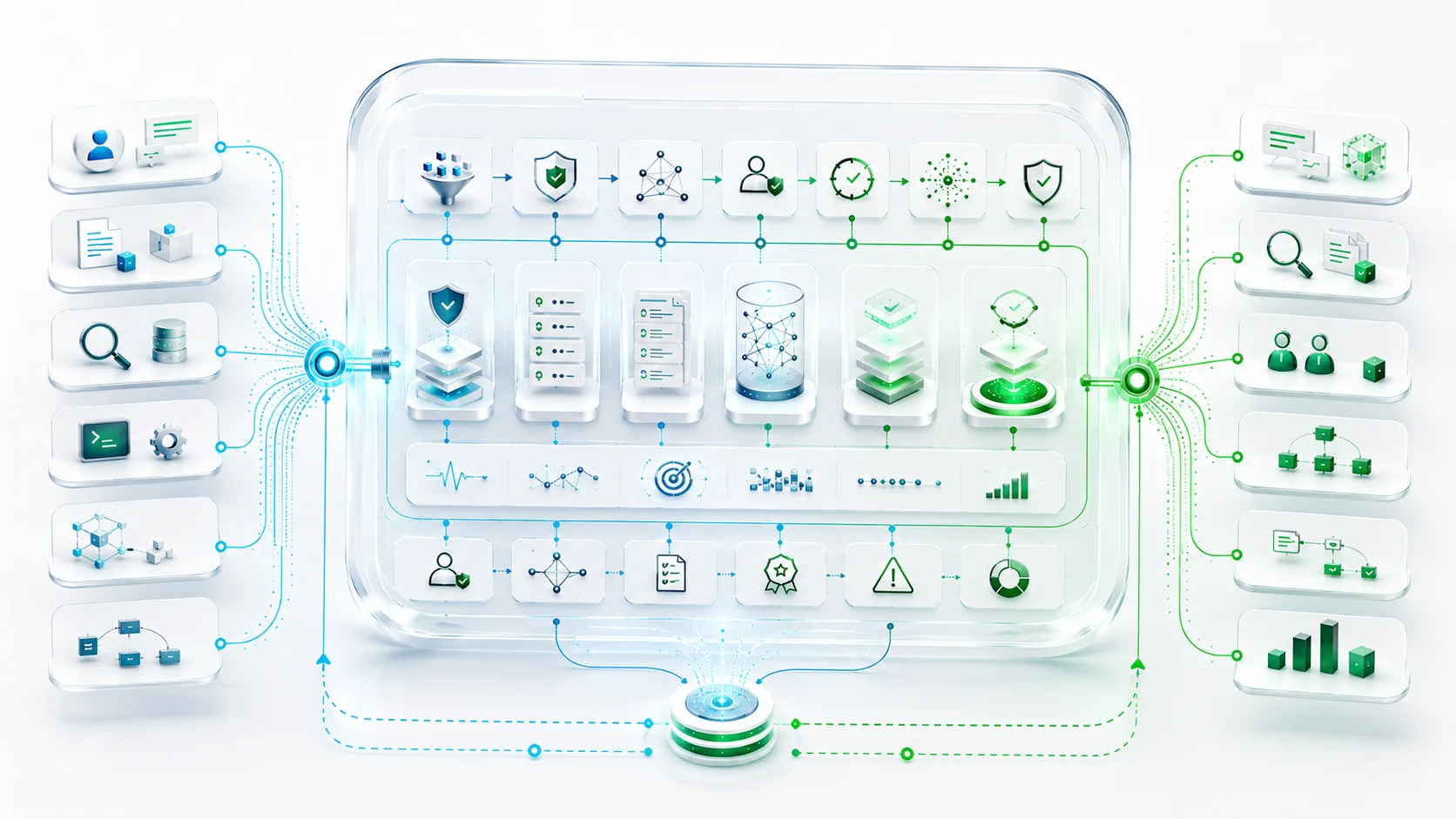
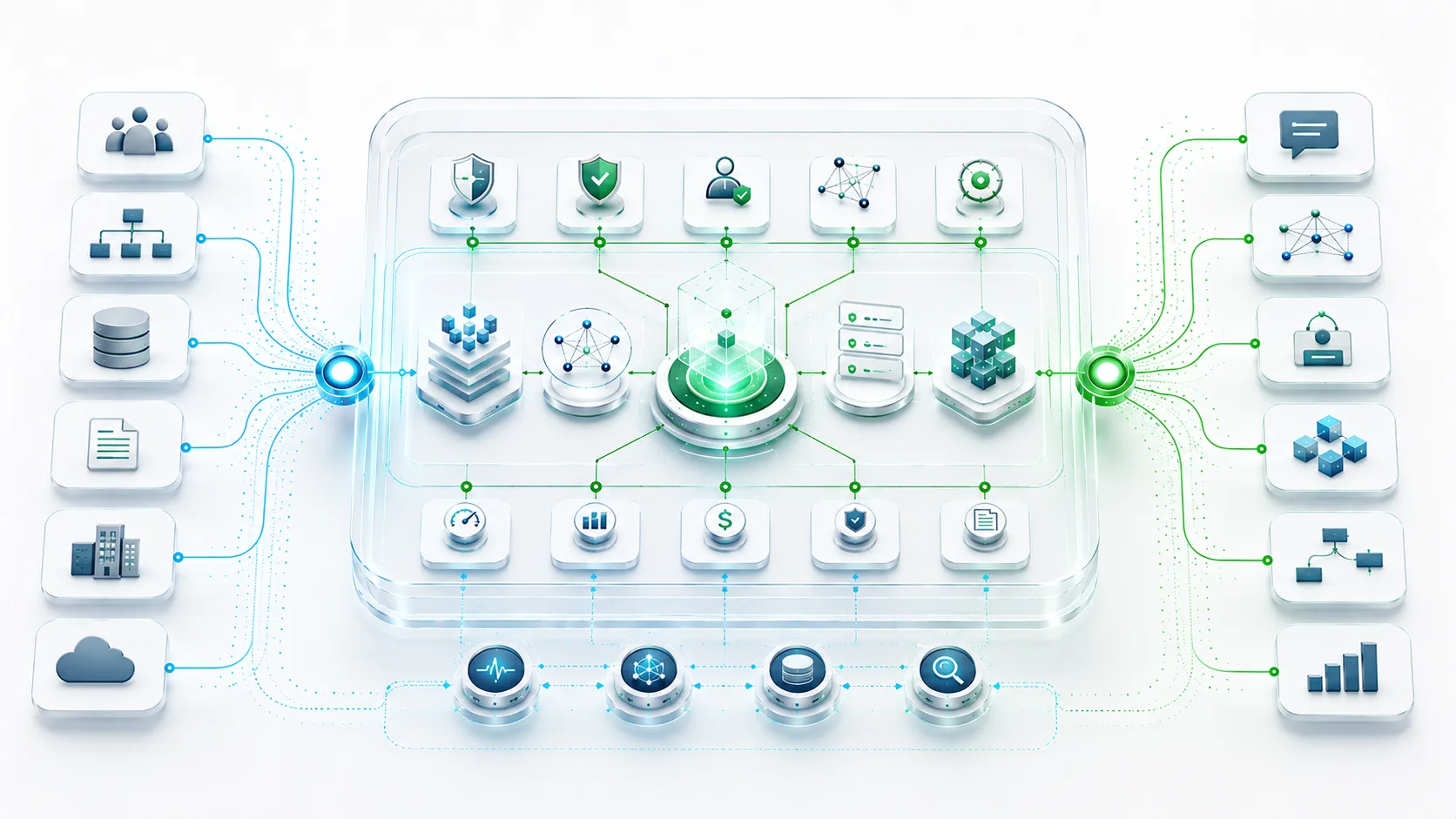
Core Components of an AI Control Plane
Governance Layer
Policy management, compliance controls, risk classification, and governance enforcement.
Orchestration Layer
Model routing, workflow coordination, agent orchestration, and service integration.
Security Layer
Identity management, authorization, runtime controls, and threat monitoring.
Operations Layer
Observability, cost governance, incident management, and reliability engineering.
Separating Control Planes from Execution Planes
One of the most important architectural principles in enterprise AI is separating control functions from execution functions.
Execution planes contain models, inference infrastructure, retrieval systems, agents, and workflow engines. These components perform business operations and generate outcomes.
Control planes oversee execution environments by enforcing policies, routing decisions, monitoring activity, collecting evidence, managing costs, and maintaining operational consistency.
Managing Multi-Model Enterprise Environments
Modern enterprises rarely rely on a single model provider. Different workloads often require different models based on performance, cost, compliance, latency, or domain expertise.
An AI control plane allows organizations to centrally manage model selection, routing policies, fallback strategies, evaluation requirements, and vendor governance without changing business applications.
Control Plane Responsibilities
- Model routing decisions
- Provider governance
- Cost optimization
- Performance management
- Policy enforcement
- Observability integration
- Security controls
- Compliance validation
Agent Orchestration and Workflow Governance
As organizations deploy autonomous agents, orchestration becomes increasingly important. Agents interact with tools, APIs, databases, and business workflows that require centralized governance.
The control plane coordinates agent permissions, approval workflows, runtime policies, tool-access boundaries, workflow sequencing, and escalation procedures.
This creates a governed environment where autonomous systems can operate safely without introducing uncontrolled operational risk.
Observability, Governance, and Cost Control
Production AI systems generate enormous amounts of telemetry. Without centralized coordination, visibility becomes fragmented across teams and platforms.
An AI control plane aggregates operational signals including model performance, retrieval quality, agent behavior, latency metrics, governance events, security alerts, and cost data.
This unified visibility enables organizations to make informed operational decisions while maintaining governance and financial accountability.
Benefits of AI Control Plane Architecture
- Centralized governance across AI systems
- Consistent security enforcement
- Unified observability and monitoring
- Multi-model orchestration
- Agent workflow governance
- Improved compliance readiness
- Operational standardization
- Reduced architectural complexity
- Better cost management
- Faster enterprise AI scaling
How YggyTech Helps
YggyTech helps enterprises design AI control plane architectures that unify governance, security, orchestration, observability, and operational management across production AI ecosystems.
Our approach enables organizations to scale AI safely while maintaining visibility, control, compliance, and operational excellence across models, agents, workflows, and business applications.
Build a Governed AI Operating Layer
YggyTech helps organizations design enterprise AI architectures that support governance, scalability, security, and operational reliability from day one.
Talk to YggyTech
Mason Carter
Cloud & Infrastructure Engineer
Mason focuses on scalable cloud ecosystems, DevOps modernization, and secure distributed infrastructure. His insights at YGGY Tech explore resilient architecture design, Kubernetes operations, cybersecurity strategy, and enterprise scalability.