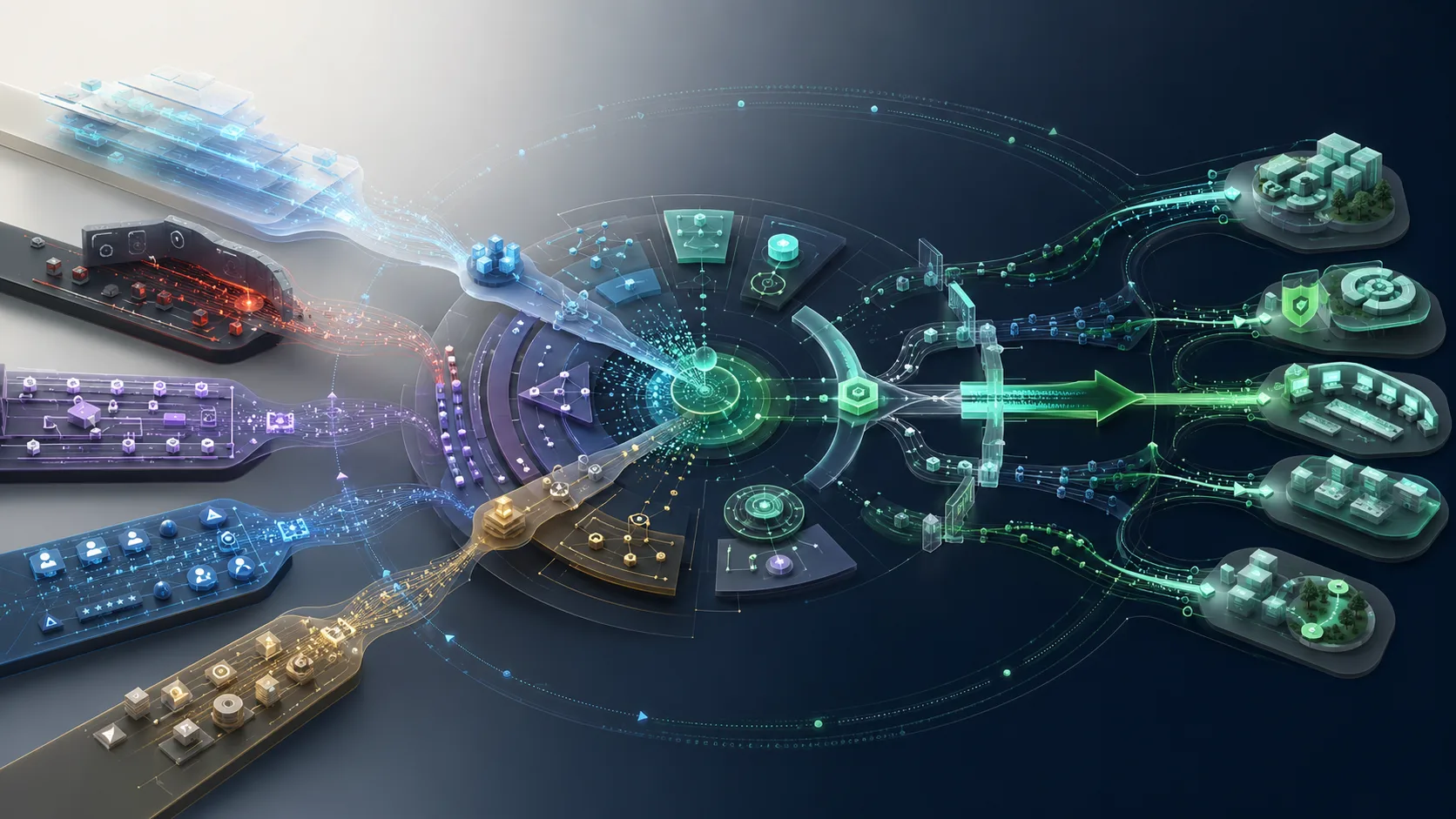
Multiagent Systems: How Enterprises Will Orchestrate Autonomous Digital Workflows
Multiagent systems are moving enterprise AI from isolated assistants to coordinated digital workforces. By connecting specialized AI agents, enterprise tools, governed data access, orchestration logic, and human approval gates, organizations can automate complex workflows without losing control, security, or accountability.
The Strategic Rise of Multiagent Systems
Multiagent systems represent the next stage of enterprise AI adoption. The first wave of generative AI helped teams draft content, summarize documents, answer questions, and accelerate individual productivity. The next wave is more operational: enterprises want AI systems that can coordinate across teams, tools, data sources, approvals, exceptions, and business processes. That requires more than one chatbot. It requires a network of specialized agents working within a governed architecture.
In an enterprise environment, work rarely happens in a single step. A customer onboarding workflow may involve identity verification, contract review, CRM updates, provisioning, compliance checks, support handoff, billing configuration, and success-manager notification. A security incident may require log analysis, threat enrichment, ticket creation, containment recommendations, stakeholder updates, evidence collection, and postmortem documentation. A single AI assistant cannot safely own all of that. A multiagent system can divide the work into specialized roles, coordinate task execution, escalate uncertain decisions, and preserve traceability.
Key Insight
The enterprise value of multiagent systems is not simply autonomy. It is governed coordination: the ability for specialized AI agents to execute workflow steps, share context, use approved tools, and escalate decisions while staying aligned with business policy and architecture controls.
What Multiagent Systems Mean for Enterprise Workflows
Multiagent systems are AI architectures where multiple agents collaborate to complete tasks or operate workflows. Each agent can have a defined role, toolset, memory scope, decision boundary, and escalation path. One agent might analyze customer data. Another might validate policy compliance. Another might generate a response. Another might update a system of record. Another might monitor the workflow for errors, risk, or drift.
For enterprises, this architecture matters because business processes are multi-domain by nature. Finance, legal, operations, sales, support, security, engineering, and compliance often interact inside the same workflow. Multiagent orchestration allows organizations to model this complexity more realistically than a single general-purpose AI assistant.
Role-Specific Agents
Agents are designed around clear responsibilities such as research, validation, planning, execution, monitoring, or escalation.
Shared Context
Agents coordinate through controlled memory, workflow state, knowledge retrieval, event history, and structured task handoffs.
Tool Orchestration
Agents interact with enterprise systems such as CRMs, ticketing platforms, data warehouses, CI/CD systems, and security tools.
Governed Autonomy
Autonomous action is limited by permission models, policy checks, approval gates, audit trails, and human-in-the-loop controls.
Why Multiagent Systems Matter Now
Enterprises are reaching the limits of simple automation. Traditional workflow tools are effective for predictable, rules-based processes, but they struggle when work requires interpretation, reasoning, context switching, unstructured data analysis, and exception handling. Many business workflows involve documents, conversations, policies, system data, approvals, customer context, and operational risk. Multiagent systems create a new layer between static automation and fully manual work.
This shift is important because enterprise work is increasingly digital but still fragmented. Teams operate across SaaS platforms, cloud systems, internal databases, compliance tools, messaging channels, and knowledge bases. Multiagent systems can coordinate these environments by assigning specialized agents to specific workflow responsibilities and using orchestration logic to control how work moves from one agent to another.
Enterprise Signal
Multiagent systems become valuable when they reduce workflow fragmentation: the delay, rework, and risk created when business intent must pass through disconnected teams, tools, documents, and approval processes.
From Task Automation to Workflow Intelligence
Basic automation executes predefined steps. Workflow intelligence interprets what is happening, adapts to context, identifies risk, and chooses the next best action within defined boundaries. Multiagent systems make this possible by separating responsibilities across agents and using orchestration to maintain control.
From Individual Assistants to Digital Operations Teams
The future of enterprise AI will not be defined by one assistant per employee. It will be shaped by agent teams embedded inside business processes. These agent teams will support operations, engineering, compliance, customer experience, finance, security, and product workflows with measurable autonomy and oversight.
Core Components of Enterprise Multiagent Systems
A mature multiagent system is not a collection of prompts. It is an architecture that connects agents, tools, policies, memory, observability, and human review into a reliable operating model. Each component must be designed intentionally because unmanaged agent collaboration can create unpredictable behavior, duplicate work, security exposure, and weak accountability.
1. Agent Roles
Each agent needs a defined purpose, responsibility boundary, allowed actions, required inputs, expected outputs, and escalation criteria.
2. Orchestration Layer
The orchestration layer controls routing, sequencing, retries, timeouts, approval gates, task handoffs, workflow state, and exception handling.
3. Enterprise Tools
Agents need secure, permission-aware access to systems of record, workflow tools, data platforms, communication systems, and operational platforms.
4. Shared Memory
Workflow memory stores task context, decisions, evidence, approvals, intermediate outputs, and event history without exposing unnecessary data.
5. Governance Controls
Policies define what agents can do, which data they can access, when humans must approve, and how actions are logged.
6. Observability
Teams need visibility into agent decisions, tool calls, errors, latency, cost, escalation rates, policy violations, and business outcomes.
Enterprise Architecture for Multiagent Systems
Multiagent systems should be treated as enterprise architecture, not experimental automation. The architecture must define how agents communicate, where workflow state lives, which tools are accessible, how permissions are enforced, how retrieval works, how outputs are validated, and how humans intervene when risk increases.
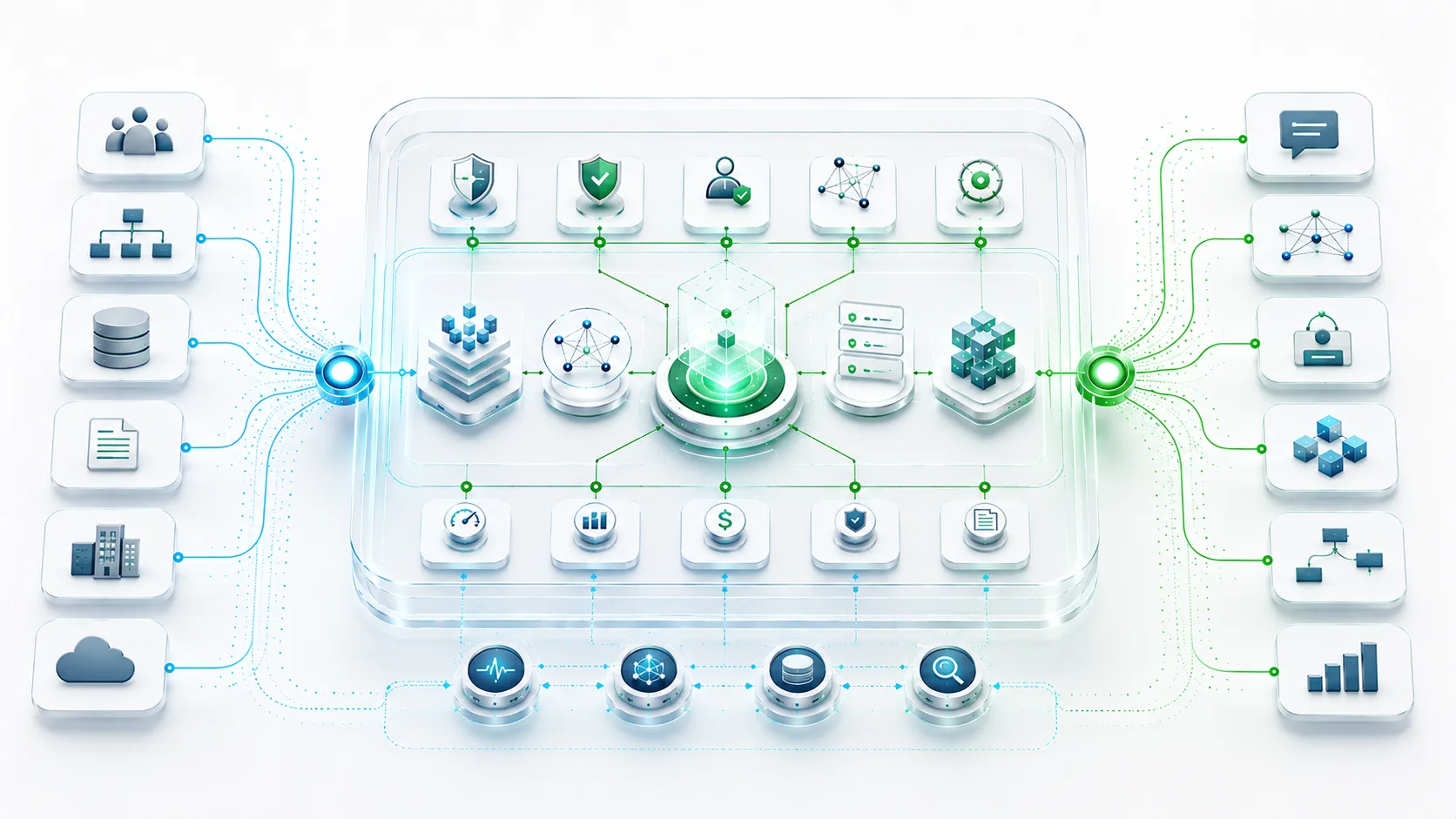
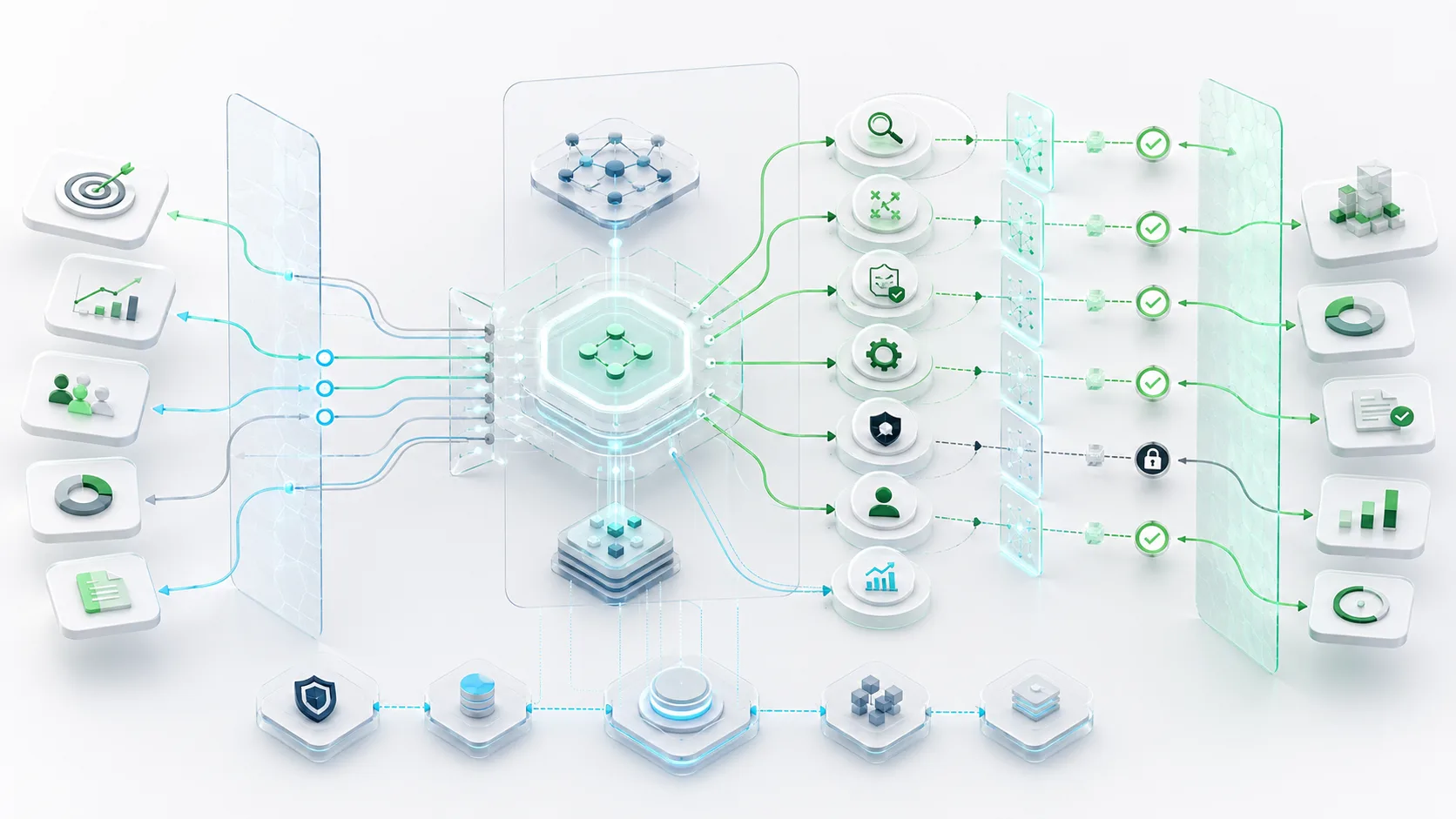
Reference Architecture Layers
Orchestration Is the Control Plane
The orchestration layer is where multiagent systems become enterprise-ready. It determines which agent should act, what context it receives, what tools it can use, when it must wait, how it handles failure, and when a human must approve. Without orchestration, agents behave like disconnected workers. With orchestration, they behave like a governed digital operations system.
Memory Requires Boundaries
Shared memory is powerful but risky. Agents should not receive more context than they need. Enterprises should design memory scopes around least privilege, data minimization, retention rules, and auditability. Workflow memory should preserve evidence and traceability without becoming an uncontrolled repository of sensitive information.
Key Takeaways
- ✓ Multiagent systems help enterprises move from isolated AI assistants to coordinated autonomous digital workflows.
- ✓ The core capability is governed orchestration, not unrestricted autonomy.
- ✓ Enterprise-ready agent systems require defined roles, controlled tools, shared workflow state, observability, and human approval gates.
- ✓ Security, identity, auditability, and data governance must be designed into the architecture from the beginning.
- ✓ The best use cases are complex, multi-step workflows with clear business value, repeatable decisions, and measurable outcomes.
High-Value Enterprise Use Cases for Multiagent Systems
Multiagent systems are most useful when workflows require multiple forms of reasoning, tool use, validation, and escalation. Enterprises should avoid starting with vague goals such as “automate everything.” The better strategy is to identify workflows where agent specialization can reduce cycle time, improve consistency, lower operational risk, or increase customer responsiveness.
Customer Onboarding
Agents can coordinate document review, identity checks, account setup, CRM updates, provisioning, compliance validation, and handoff tasks.
Security Operations
Agents can analyze alerts, enrich threat data, summarize evidence, recommend containment actions, and route incidents for approval.
IT Service Management
Agents can classify tickets, gather context, suggest remediation, execute approved runbooks, and update users with status changes.
Finance Operations
Agents can support invoice review, exception detection, approval routing, reconciliation, reporting, and policy compliance checks.
Software Delivery
Agents can coordinate requirements analysis, code review support, test generation, security checks, release notes, and deployment readiness.
Knowledge Operations
Agents can maintain knowledge bases, summarize decisions, detect outdated documentation, and route updates to owners.
Security, Privacy, and Governance Risks
Multiagent systems can create real operational leverage, but they also introduce new risk surfaces. Agents may call tools, access sensitive data, generate outputs, trigger workflows, update systems of record, or make recommendations that influence business decisions. When several agents collaborate, it becomes even more important to define accountability and preserve traceability.
Tool Misuse
Agents should only access approved tools with scoped permissions, rate limits, validation checks, and rollback procedures.
Data Exposure
Workflow context should be minimized, permission-aware, encrypted where required, and restricted by role, purpose, and retention policy.
Decision Drift
Agents can gradually produce inconsistent outputs unless evaluated against policy, examples, tests, and business rules.
Human-in-the-Loop Controls
Enterprise autonomy should be proportional to risk. Low-risk tasks may be fully automated. Medium-risk tasks may require review after execution. High-risk tasks should require explicit approval before action. This tiered model allows organizations to gain efficiency without giving agents unlimited authority.
Governance Guardrail
Multiagent systems should never be deployed as black boxes. Every important action should have an owner, a policy basis, a traceable event history, and a clear escalation path.
Common Mistakes
Many multiagent initiatives fail because teams focus on impressive demos instead of durable operating models. A prototype where agents talk to each other is not the same as an enterprise system that can safely run business workflows.
- Creating too many agents too early. More agents do not automatically create better workflows. Start with clear responsibilities and add agents only when specialization improves quality or control.
- Skipping orchestration design. Without routing, state management, retries, and escalation logic, agents become unpredictable and difficult to operate.
- Giving agents broad tool access. Agents should not inherit human-level access by default. Tool permissions must be scoped and policy-aware.
- Ignoring observability. Enterprises need visibility into agent behavior, cost, latency, errors, tool calls, and workflow outcomes.
- Treating prompts as architecture. Prompts are only one layer. Production systems need APIs, memory, policies, evaluation, monitoring, security, and lifecycle management.
- Automating unclear processes. Multiagent systems should not automate chaos. Workflows must be understood, simplified, and governed before autonomy is added.
Enterprise Architecture Perspective
From an enterprise architecture perspective, multiagent systems are not a feature. They are a new digital operations layer. They sit between business intent and enterprise execution, coordinating tasks across systems, people, policies, and data. That means they must be integrated with identity, access management, integration architecture, data governance, workflow platforms, observability, cybersecurity, and compliance operations.
The best architecture separates agent intelligence from operational control. Agents can reason, summarize, recommend, and execute scoped actions. The orchestration layer should control permissions, routing, state, evaluation, and escalation. Governance should define boundaries. Observability should make the system inspectable. This separation allows enterprises to scale autonomy without turning business operations into an uncontrolled experiment.
Architecture Principle
Design multiagent systems like enterprise infrastructure. Autonomy must be observable, policy-bound, secure by default, and aligned with business process ownership.
Implementation Strategy for Multiagent Systems
Enterprises should implement multiagent systems through a phased approach that prioritizes workflow clarity, risk management, and measurable outcomes. The goal is not to deploy the most complex agent network. The goal is to orchestrate business work more intelligently with strong control.
Phase 1: Identify Workflow Candidates
Start with workflows that are repetitive, high-volume, knowledge-intensive, and measurable. Good candidates have clear inputs, known systems, recurring decisions, and visible bottlenecks. Avoid workflows where ownership is unclear or policies are undefined.
Phase 2: Define Agent Roles and Boundaries
Define what each agent does, what it cannot do, which tools it can access, what evidence it must produce, and when it must escalate. Role clarity reduces duplicate work and makes the system easier to evaluate.
Phase 3: Build the Orchestration and Governance Layer
Implement workflow state, policy checks, access controls, approval gates, event logs, retries, exception paths, and observability. This layer is the difference between a demo and a production-ready multiagent system.
Phase 4: Evaluate, Monitor, and Scale
Measure workflow outcomes, agent accuracy, escalation rates, cost, latency, error patterns, policy exceptions, and user trust. Scale only after the system performs reliably under real workflow conditions.
Implementation Checklist
Foundation
- Map workflow ownership
- Identify high-value use cases
- Define agent roles
- Document system integrations
Governance
- Set permission boundaries
- Create approval gates
- Define audit requirements
- Establish escalation paths
Scale
- Monitor agent behavior
- Measure workflow outcomes
- Standardize reusable patterns
- Continuously improve from telemetry
Measuring the Business Impact of Multiagent Systems
Multiagent systems should be measured by workflow outcomes, not novelty. Enterprises should track whether agent orchestration reduces cycle time, improves accuracy, increases consistency, lowers operational cost, strengthens compliance, improves customer experience, or reduces manual workload in measurable ways.
Metrics to Track
How YggyTech Helps
YggyTech helps enterprises design, implement, and scale multiagent systems with architecture-first discipline. We do not treat agentic AI as a quick automation layer. We help organizations build secure, observable, governed, and measurable agent orchestration systems that connect enterprise AI with real operational workflows.
Agentic AI Strategy
We identify high-value workflows, define agent roles, assess automation readiness, and prioritize use cases with measurable enterprise impact.
Multiagent Architecture
We design orchestration layers, tool integration patterns, memory boundaries, governance controls, evaluation methods, and observability models.
Implementation and Scale
We help teams build pilots, validate workflows, integrate enterprise systems, establish LLMOps, and scale agentic automation safely.
Our expertise spans enterprise AI, AI agents, cloud architecture, LLMOps, DevSecOps, cybersecurity, software architecture, and digital transformation. That systems-level perspective matters because multiagent systems only succeed when intelligence, infrastructure, governance, and business operations are designed together.
Orchestrate Autonomous Workflows with Enterprise Control
YggyTech helps technology leaders move from isolated AI experiments to secure, governed, and scalable multiagent systems that improve workflow speed, operational intelligence, and enterprise execution maturity.
Talk to YggyTechFAQs About Multiagent Systems
What are multiagent systems?
Multiagent systems are AI architectures where multiple specialized agents collaborate to complete tasks, coordinate workflows, use tools, share context, and escalate decisions under defined controls.
How do multiagent systems help enterprises?
Multiagent systems help enterprises automate complex workflows that require reasoning, tool use, validation, approvals, and coordination across departments, systems, and data sources.
Are multiagent systems the same as AI agents?
No. An AI agent is usually a single autonomous or semi-autonomous unit. A multiagent system coordinates multiple agents with different roles, tools, responsibilities, and workflow boundaries.
What are the risks of multiagent systems?
The main risks include tool misuse, sensitive data exposure, unclear accountability, decision drift, excessive autonomy, weak auditability, and unpredictable agent coordination. These risks can be reduced through governance, orchestration, observability, and human approval gates.
How should enterprises start implementing multiagent systems?
Enterprises should start by selecting a measurable workflow, defining agent roles, mapping tool access, setting governance controls, building an orchestration layer, piloting with human oversight, and scaling only after performance is validated.

Ava Mitchell
UX & Digital Experience Strategist
Ava combines product psychology, interface systems, and user-centered design to create digital experiences that feel intuitive and scalable. Her work at YGGY Tech focuses on high-conversion UX systems, enterprise interfaces, and design-driven growth.