AI Decision Systems for Enterprise Operations: Building Intelligent Operational Infrastructure in 2026
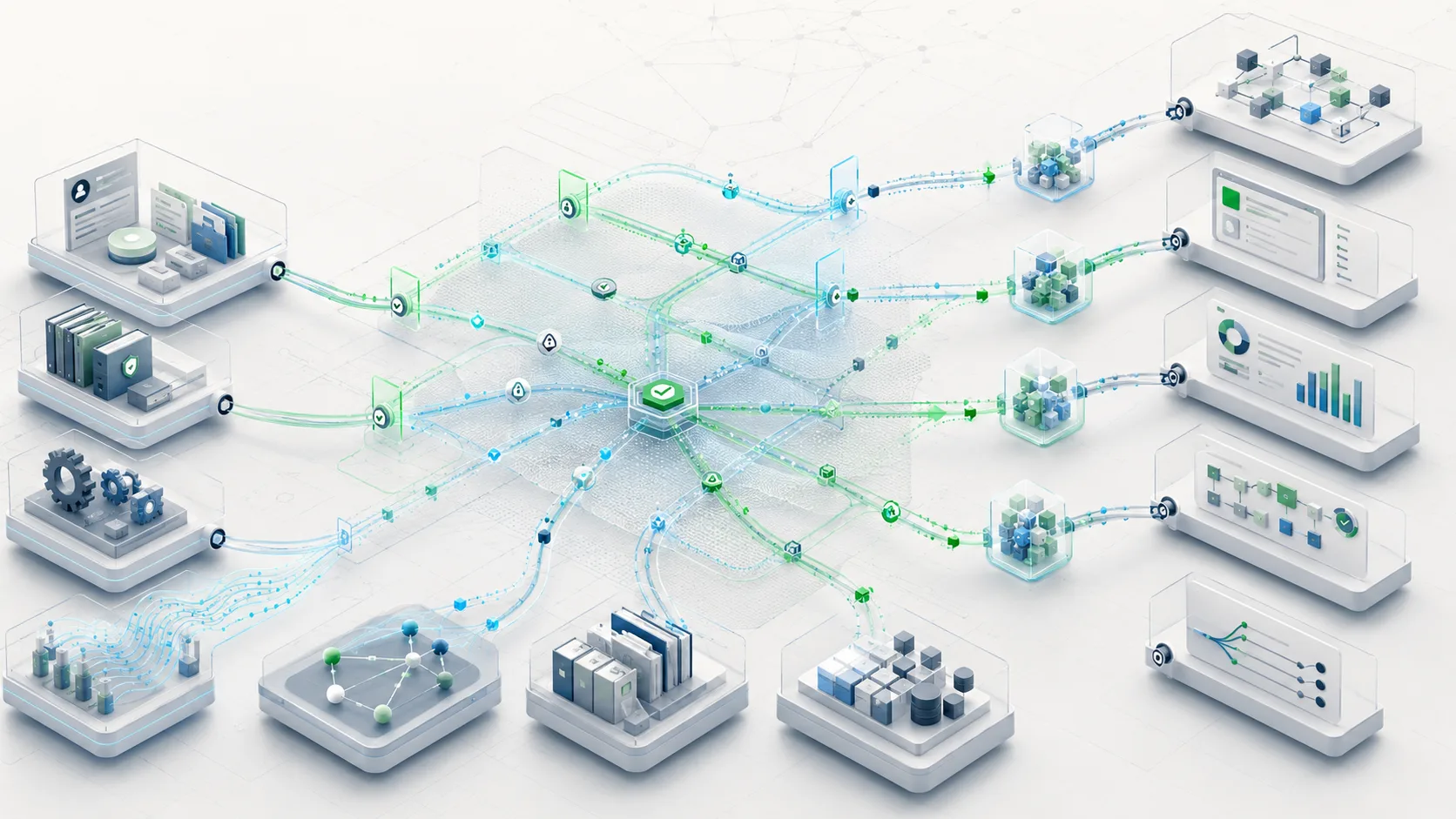
Enterprise operations are becoming too complex for traditional automation systems alone. Cloud infrastructure, cybersecurity telemetry, engineering workflows, customer operations, financial systems, compliance controls, and distributed platforms continuously generate operational signals that require intelligent prioritization and real-time response.
In 2026, AI Decision Systems are emerging as the operational intelligence layer that enables enterprises to orchestrate, optimize, and govern these decisions at scale. Rather than relying exclusively on static workflows and manual intervention, organizations are deploying adaptive decision architectures capable of evaluating context, routing actions, enforcing policy, and coordinating enterprise systems dynamically.
The next generation of enterprise competitiveness will be determined by operational decision velocity — how intelligently organizations can analyze signals, orchestrate actions, and govern operational workflows across distributed systems.
What Are AI Decision Systems for Enterprise Operations?
AI Decision Systems for Enterprise Operations are intelligent operational platforms that evaluate enterprise conditions, process infrastructure signals, orchestrate workflows, and execute or recommend decisions across operational environments.
These systems combine:
- AI reasoning systems
- Operational telemetry
- Workflow orchestration
- Infrastructure automation
- Governance policies
- Decision intelligence engines
- Event-driven architectures
- Human escalation frameworks
Unlike traditional enterprise automation, AI Decision Systems continuously adapt to operational conditions and dynamically coordinate actions across enterprise infrastructure.
Operational Intelligence
Analyze real-time operational conditions across distributed enterprise systems.
Decision Orchestration
Coordinate intelligent workflows and infrastructure actions dynamically.
Governed Automation
Maintain enterprise oversight, compliance, and observability across operational decisions.
Why Enterprise Operations Need AI Decision Systems
Operational complexity has increased dramatically across enterprise environments.
Organizations now manage:
- Multi-cloud infrastructure
- Distributed AI workloads
- Autonomous operational systems
- Enterprise security telemetry
- Global SaaS operations
- Continuous deployment environments
- Real-time customer operations
- Infrastructure observability pipelines
Traditional operational models cannot reliably process this volume of signals at enterprise scale.
The Evolution of Enterprise Operations
| Traditional Operations | AI Decision Operations |
|---|---|
| Manual workflow coordination | Intelligent workflow orchestration |
| Reactive infrastructure management | Predictive operational optimization |
| Static automation rules | Adaptive contextual decisions |
| Limited operational visibility | Continuous operational intelligence |
The most mature enterprises are evolving from workflow automation toward operational intelligence platforms capable of autonomous decision coordination across infrastructure ecosystems.
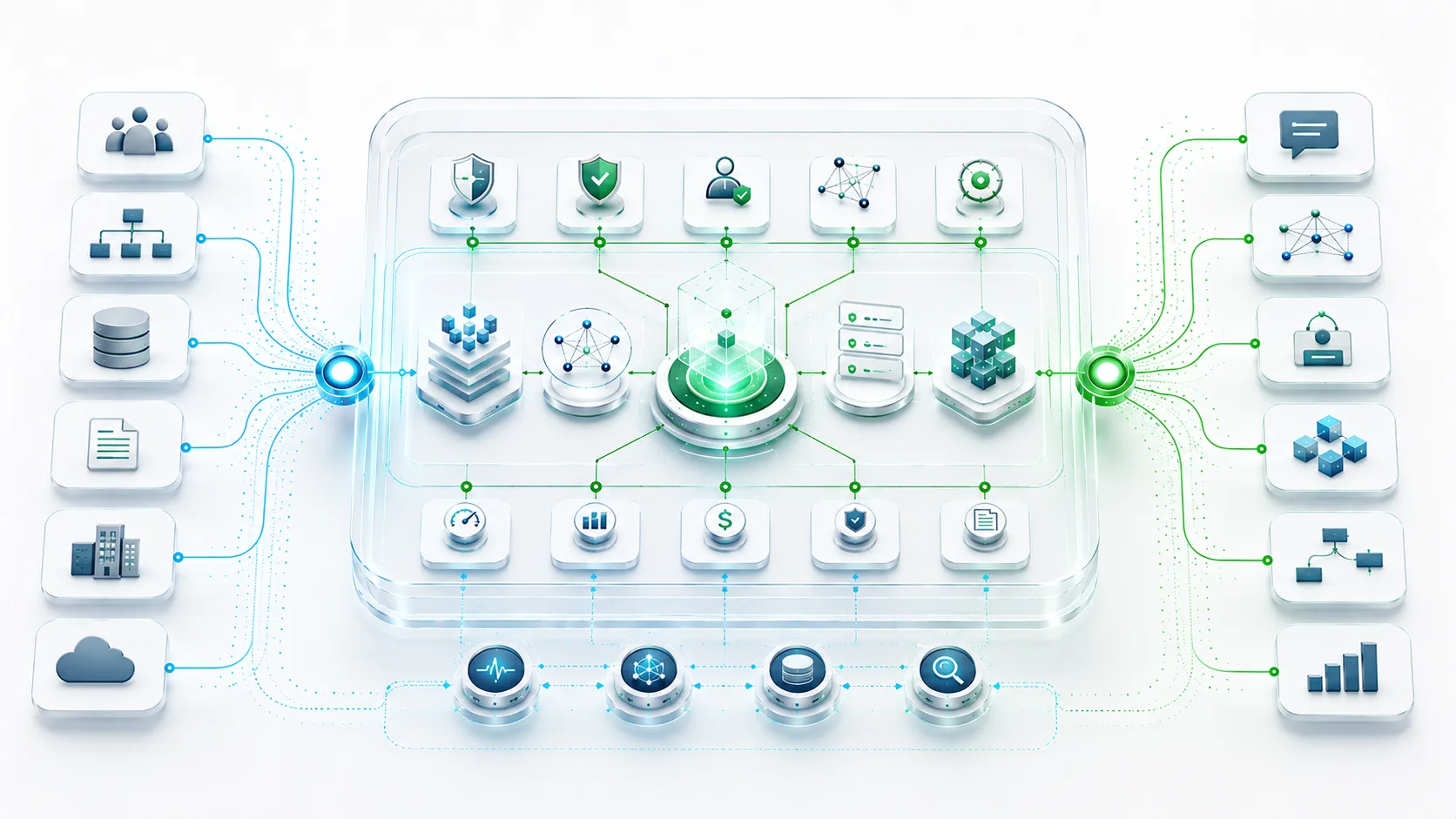
Core Components of Enterprise AI Decision Architecture
1. Signal Ingestion Infrastructure
Enterprise Decision Systems require centralized operational signal pipelines capable of aggregating:
- Infrastructure telemetry
- Cloud metrics
- Security alerts
- Application events
- Workflow states
- Observability streams
- API activity
- AI inference behavior
2. Decision Intelligence Engines
Decision engines evaluate enterprise conditions using:
- LLM reasoning systems
- Operational ML models
- Decision graphs
- Policy engines
- Context orchestration systems
- Risk scoring frameworks
3. Orchestration and Execution Systems
These systems coordinate enterprise actions across:
- Cloud infrastructure
- Security platforms
- Engineering workflows
- Developer platforms
- Enterprise APIs
- AI agents
- Operational systems
Operational Telemetry Aggregation
Collect and normalize infrastructure events, telemetry, observability signals, and operational workflows into centralized intelligence pipelines.
Adaptive Enterprise Orchestration
Execute governed operational workflows dynamically across distributed enterprise infrastructure environments.
Enterprise Use Cases
Infrastructure Operations
AI Decision Systems optimize:
- Cloud resource allocation
- Infrastructure scaling
- GPU scheduling
- Latency optimization
- Capacity forecasting
- Operational resilience
Cybersecurity Operations
Security teams use AI Decision Systems for:
- Threat prioritization
- Incident routing
- Automated containment
- Access governance
- Risk scoring
- Anomaly escalation
Developer and Platform Operations
Engineering teams deploy AI decision orchestration for:
- CI/CD optimization
- Deployment routing
- Incident response
- Infrastructure prioritization
- Observability workflows
- Platform governance
Enterprise Architecture Perspective
AI Decision Systems should be treated as operational infrastructure rather than isolated AI features.
Architecture teams must design these systems around:
Enterprise Decision Architecture Principles
- Event-driven orchestration
- Policy-governed decision routing
- Human escalation frameworks
- Observability-first operations
- Cross-platform interoperability
- Runtime governance enforcement
- Operational resilience engineering
- Infrastructure abstraction layers
The most effective AI operational systems are deeply integrated into enterprise infrastructure ecosystems rather than deployed as disconnected automation services.
Governance, Security, and Reliability
Governance Challenges
As operational AI systems gain autonomy, enterprises must manage:
- Decision traceability
- Policy compliance
- Autonomous action boundaries
- Runtime validation
- Human override controls
- Operational auditability
Security Considerations
Operational decision systems require:
- Zero Trust access governance
- Runtime policy enforcement
- Infrastructure isolation
- Decision authorization systems
- Secure orchestration APIs
- Operational audit logging
Operational Governance Insight
The future of enterprise AI governance is increasingly centered on operational decision governance — ensuring that autonomous systems behave reliably, observably, and within defined enterprise boundaries.
Implementation Checklist
Enterprise AI Decision Operations Checklist
- Define operational governance policies
- Implement centralized signal ingestion
- Deploy AI observability systems
- Establish escalation workflows
- Standardize orchestration APIs
- Implement runtime security validation
- Deploy audit logging infrastructure
- Define operational decision metrics
- Establish human-in-the-loop controls
- Implement policy-as-code governance
- Deploy resilience engineering frameworks
- Continuously validate operational outcomes
Common Mistakes Enterprises Make
Over-Automating Without Governance
Operational autonomy without governance creates reliability and compliance risks.
Ignoring Observability
Without operational observability, enterprises lose visibility into decision behavior and infrastructure actions.
Fragmented Operational Infrastructure
Disconnected systems reduce orchestration reliability and limit enterprise scalability.
The most dangerous operational AI environments are not the most autonomous — they are the least observable.
Key Takeaways
Operational Intelligence Is Becoming Core Infrastructure
AI Decision Systems are evolving into enterprise operational control layers.
Governance Enables Safe Automation
Scalable enterprise AI requires runtime oversight, observability, and policy enforcement.
Architecture Determines Reliability
Decision orchestration systems succeed when infrastructure and governance are designed together.
How YggyTech Helps
YggyTech helps enterprises operationalize intelligent AI-driven decision systems across cloud infrastructure, security operations, platform engineering, and enterprise workflows.
Our teams support:
- AI decision architecture design
- Operational orchestration systems
- AI governance implementation
- Enterprise observability platforms
- Cloud-native AI operations
- Runtime infrastructure security
- Human-in-the-loop frameworks
- Operational resilience engineering
Build Intelligent Enterprise Operations with AI Decision Systems
YggyTech helps organizations build scalable AI operational infrastructure through enterprise orchestration systems, governance frameworks, observability architecture, and intelligent workflow automation.
Schedule an Enterprise AI Operations ConsultationFAQs
What are AI Decision Systems for Enterprise Operations?
They are intelligent operational platforms that analyze enterprise signals, orchestrate workflows, and automate governed decisions across infrastructure and operational systems.
How are AI Decision Systems used in enterprise operations?
Organizations use them for infrastructure optimization, security operations, workflow orchestration, operational automation, observability, and enterprise governance.
Why are AI Decision Systems important in 2026?
Enterprise operational complexity now exceeds the capabilities of traditional manual workflows and static automation systems.
What governance challenges exist in operational AI systems?
Key challenges include observability, decision traceability, runtime security, autonomous risk management, policy enforcement, and human oversight.
How does YggyTech help enterprises implement AI Decision Systems?
YggyTech helps enterprises design scalable operational AI infrastructure, governance systems, orchestration frameworks, and observability platforms for intelligent enterprise operations.

Ava Mitchell
UX & Digital Experience Strategist
Ava combines product psychology, interface systems, and user-centered design to create digital experiences that feel intuitive and scalable. Her work at YGGY Tech focuses on high-conversion UX systems, enterprise interfaces, and design-driven growth.