AI-Native Internal Developer Platforms (IDPs)
Enterprise software delivery is entering a new operational era where infrastructure platforms are no longer static engineering toolchains. Internal Developer Platforms are rapidly evolving into intelligent operational systems capable of orchestrating infrastructure, automating workflows, governing deployments, and enabling autonomous engineering operations at enterprise scale.
By 2026, the most advanced organizations are moving beyond traditional platform engineering toward AI-native Internal Developer Platforms that combine orchestration, observability, governance, developer enablement, and operational intelligence into unified platform ecosystems.
The Shift Toward AI-Native Platforms
Traditional Internal Developer Platforms standardized infrastructure delivery. AI-native IDPs go further by introducing operational intelligence, autonomous orchestration, adaptive governance, intelligent workflow routing, and context-aware infrastructure automation.
What Is an AI-Native Internal Developer Platform?
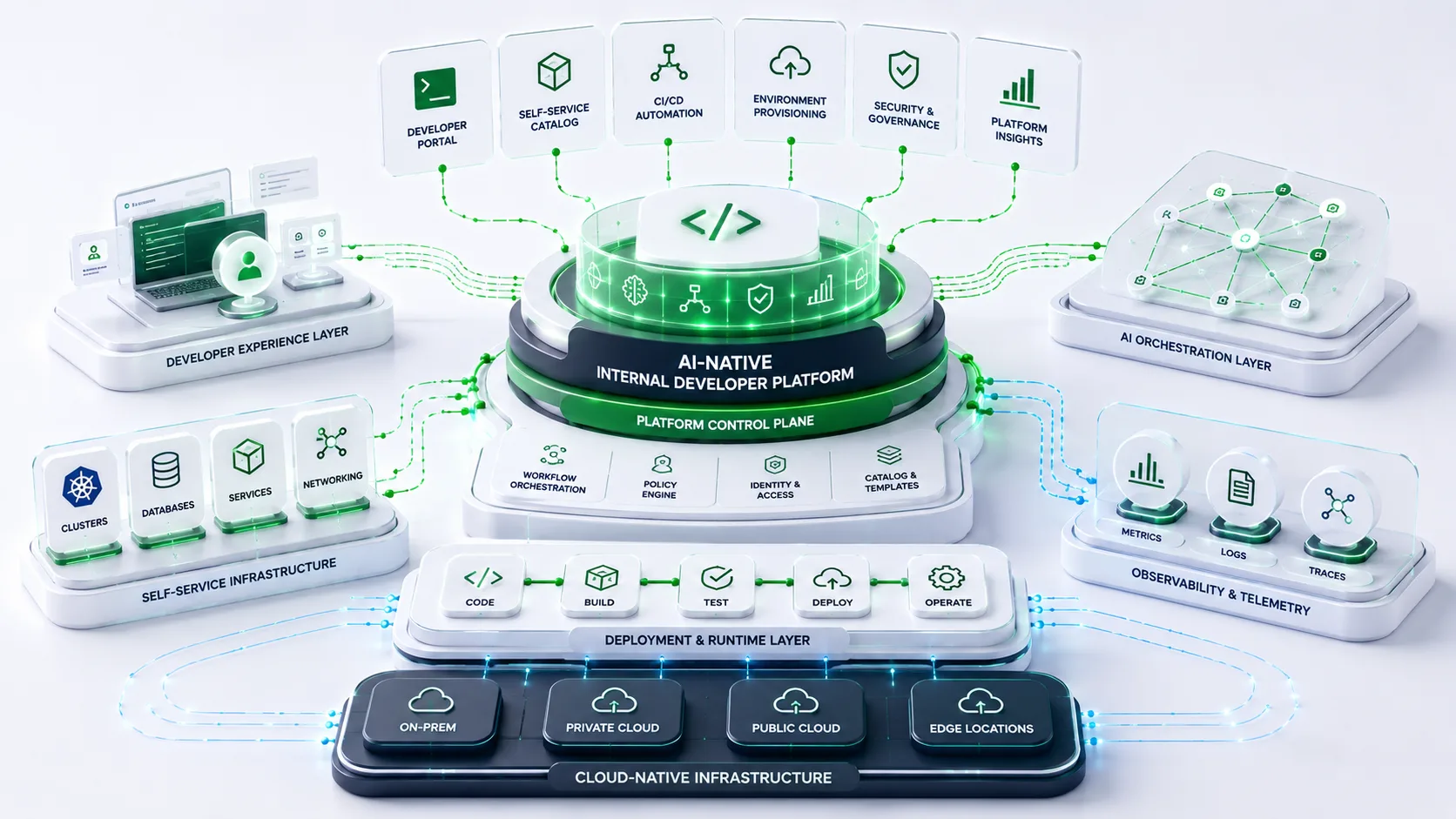
An AI-native Internal Developer Platform is an intelligent infrastructure abstraction layer designed to simplify enterprise engineering workflows while enabling autonomous operational coordination across distributed cloud-native environments.
Unlike traditional developer portals or deployment systems, AI-native IDPs continuously optimize operational workflows using telemetry, contextual intelligence, runtime governance, and adaptive orchestration systems.
Infrastructure Automation
Automating provisioning, deployment, orchestration, and scaling operations.
Developer Enablement
Simplifying operational workflows through self-service engineering systems.
Operational Intelligence
Using AI-driven telemetry and observability for platform optimization.
Governed Automation
Applying policy-aware orchestration across enterprise infrastructure systems.
Why Enterprises Are Investing in AI-Native IDPs
Modern engineering organizations face increasing operational complexity:
- Multi-cloud infrastructure sprawl
- Kubernetes operational complexity
- Fragmented CI/CD ecosystems
- Rising observability requirements
- Security and governance challenges
- Developer productivity bottlenecks
- AI workload orchestration demands
Operational Complexity Is the New Bottleneck
AI-native IDPs help enterprises reduce operational fragmentation by centralizing orchestration, governance, telemetry, and developer workflows into unified intelligent platform systems.
Core Components of AI-Native IDP Architecture
AI-Orchestrated Infrastructure Control Planes
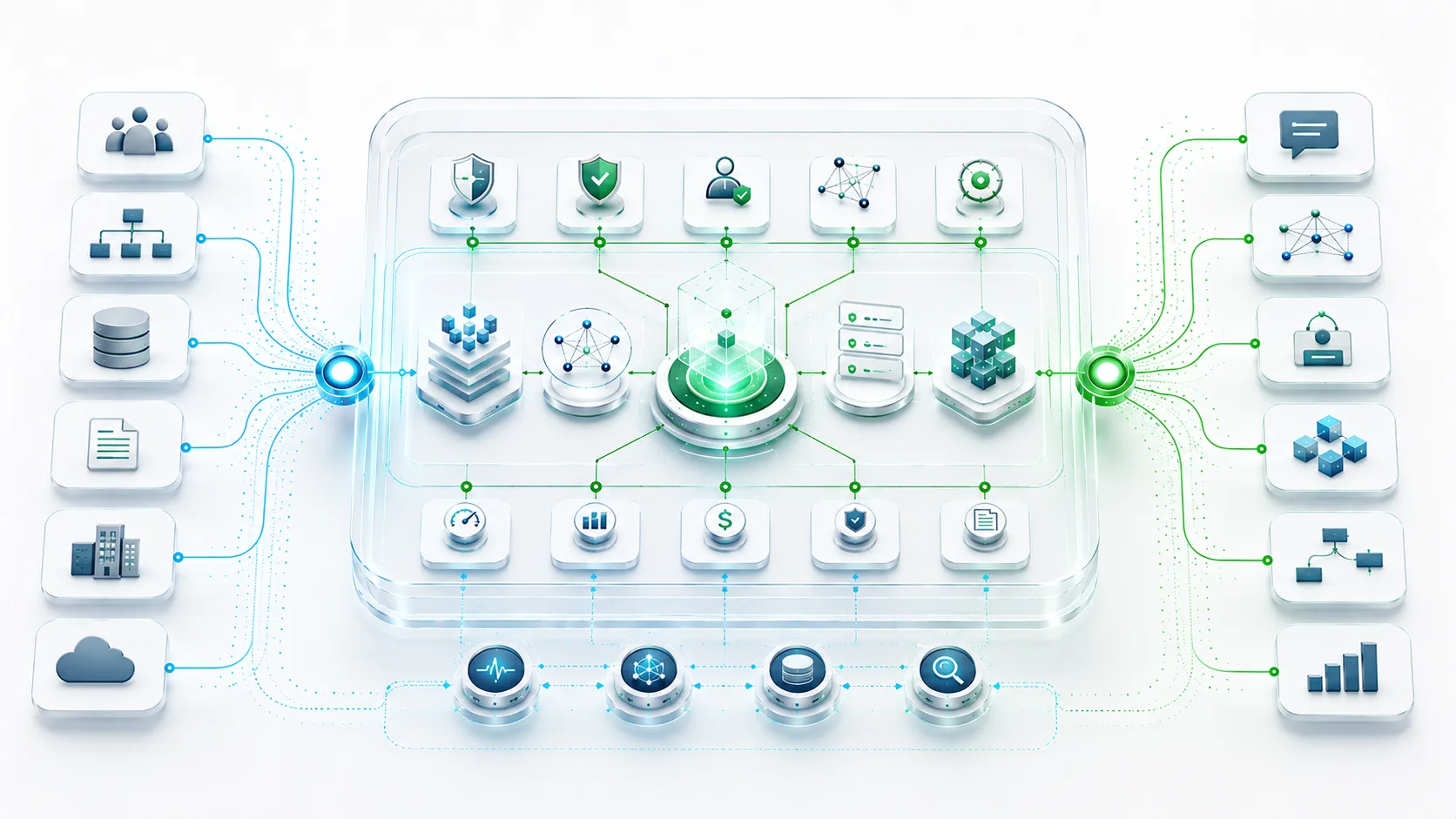
Modern IDPs increasingly operate through centralized control planes capable of coordinating infrastructure workflows, deployment systems, runtime policies, and operational telemetry.
Self-Service Engineering Workflows
AI-native IDPs abstract operational complexity through reusable infrastructure templates, automated provisioning systems, and intelligent deployment pathways.
Self-Service Platform Capabilities
- Infrastructure provisioning
- Environment orchestration
- Deployment automation
- Policy enforcement
- Observability integration
- AI workload management
Operational Telemetry Intelligence
AI-native IDPs integrate observability systems directly into platform operations, enabling runtime visibility across workloads, infrastructure, deployments, and orchestration layers.
Governance and Policy Systems
Enterprise platforms increasingly require runtime governance capable of enforcing security boundaries, infrastructure policies, identity controls, and compliance workflows automatically.
How AI Is Transforming Internal Developer Platforms
Intelligent Deployment Automation
AI-native systems optimize deployment routing, rollout strategies, rollback coordination, and infrastructure scaling decisions dynamically.
Operational Anomaly Detection
AI-powered observability systems identify infrastructure anomalies, operational bottlenecks, and deployment failures proactively.
Adaptive Workflow Optimization
AI systems continuously improve platform workflows using telemetry-driven operational insights.
Autonomous Infrastructure Coordination
The most advanced enterprise platforms increasingly coordinate distributed systems with minimal human intervention.
The Future of Platform Engineering
Internal Developer Platforms are evolving into intelligent operational systems that combine orchestration, governance, observability, and AI-driven infrastructure coordination into unified enterprise engineering platforms.
Enterprise Use Cases
Cloud-Native Engineering
Standardizing Kubernetes and distributed infrastructure workflows.
AI Infrastructure Operations
Managing inference systems, orchestration layers, and GPU infrastructure.
Developer Productivity
Reducing engineering friction through self-service automation.
Governed Platform Operations
Enforcing runtime governance and operational policy systems.
Challenges Enterprises Face
- Balancing abstraction with flexibility
- Managing Kubernetes complexity
- Integrating legacy infrastructure systems
- Operationalizing AI governance
- Scaling observability infrastructure
- Aligning developer workflows across teams
- Supporting multi-cloud operational environments
Implementation Strategy for Enterprise Teams
Start with Golden Paths
Standardize common operational workflows before introducing autonomous orchestration systems.
Integrate Observability Early
AI-native IDPs require deep telemetry integration for operational intelligence and adaptive automation.
Build Governance into the Platform
Governance should operate as a native platform capability rather than an external security layer.
Phase 1
Platform standardization and workflow abstraction.
Phase 2
Telemetry-driven operational intelligence integration.
Phase 3
Autonomous orchestration and AI-native infrastructure coordination.
Common Enterprise Mistakes
- Building overly complex platform abstractions
- Ignoring developer experience design
- Separating governance from workflows
- Treating observability as optional
- Failing to operationalize telemetry intelligence
- Lacking platform ownership models
- Underestimating runtime orchestration complexity
AI-Native IDP Checklist
- Implement reusable infrastructure templates
- Enable self-service deployment systems
- Integrate operational telemetry pipelines
- Build centralized orchestration control planes
- Enforce runtime governance policies
- Support AI workload orchestration
- Automate operational remediation workflows
- Optimize developer productivity pathways
Key Takeaways
- AI-native IDPs are transforming enterprise platform engineering.
- Operational intelligence is becoming central to developer platforms.
- Self-service infrastructure automation improves engineering scalability.
- Governed orchestration is essential for enterprise AI operations.
- Modern IDPs are evolving toward autonomous operational coordination.
How YggyTech Helps
YggyTech helps enterprises design AI-native Internal Developer Platforms, autonomous infrastructure orchestration systems, operational telemetry architectures, and scalable cloud-native engineering ecosystems.
Platform Engineering
Building intelligent Internal Developer Platforms for enterprise operations.
AI Infrastructure
Designing scalable orchestration and operational intelligence systems.
Operational Governance
Implementing runtime governance and policy-aware platform architecture.
Build AI-Native Developer Platforms
Modern enterprises require intelligent infrastructure platforms capable of orchestrating workflows, automating operations, and enabling scalable engineering productivity. YggyTech helps organizations build next-generation AI-native Internal Developer Platforms.
Talk to YggyTechFAQs
What is an Internal Developer Platform?
An Internal Developer Platform is a centralized engineering platform that simplifies infrastructure workflows through self-service automation, orchestration, governance, and operational tooling.
What makes an IDP AI-native?
AI-native IDPs integrate operational intelligence, telemetry-driven automation, adaptive orchestration, anomaly detection, and intelligent infrastructure coordination directly into platform operations.
Why are enterprises adopting AI-native platforms?
Enterprises use AI-native platforms to reduce operational complexity, improve developer productivity, automate workflows, and scale cloud-native infrastructure operations.
How do AI-native IDPs improve developer experience?
They simplify infrastructure interactions through self-service automation, reusable workflows, intelligent deployment systems, and centralized operational tooling.
What technologies are commonly used in modern IDPs?
Modern Internal Developer Platforms commonly use Kubernetes, Backstage, Terraform, GitOps workflows, observability systems, policy engines, and AI-driven orchestration frameworks.

Maheer Alishba
Data & Automation Consultant
Maheer writes about data engineering, AI-powered analytics, and intelligent business automation. Her content helps organizations understand how to transform fragmented operational data into measurable business intelligence and predictive systems.