The Rise of Enterprise Edge Computing in 2026
Enterprise infrastructure is undergoing one of the most significant architectural shifts since the rise of cloud computing. In 2026, organizations are increasingly moving operational intelligence, AI inference, orchestration systems, and real-time decision infrastructure closer to where data is generated — at the edge.
Edge Computing is no longer limited to IoT devices or remote industrial environments. Modern enterprises are operationalizing distributed edge infrastructure across retail systems, logistics networks, manufacturing operations, healthcare environments, smart infrastructure, autonomous AI systems, and real-time operational intelligence platforms.
The future of enterprise infrastructure will not be cloud-only. It will be distributed across cloud, edge, AI runtime environments, and autonomous operational systems.
What Is Enterprise Edge Computing?
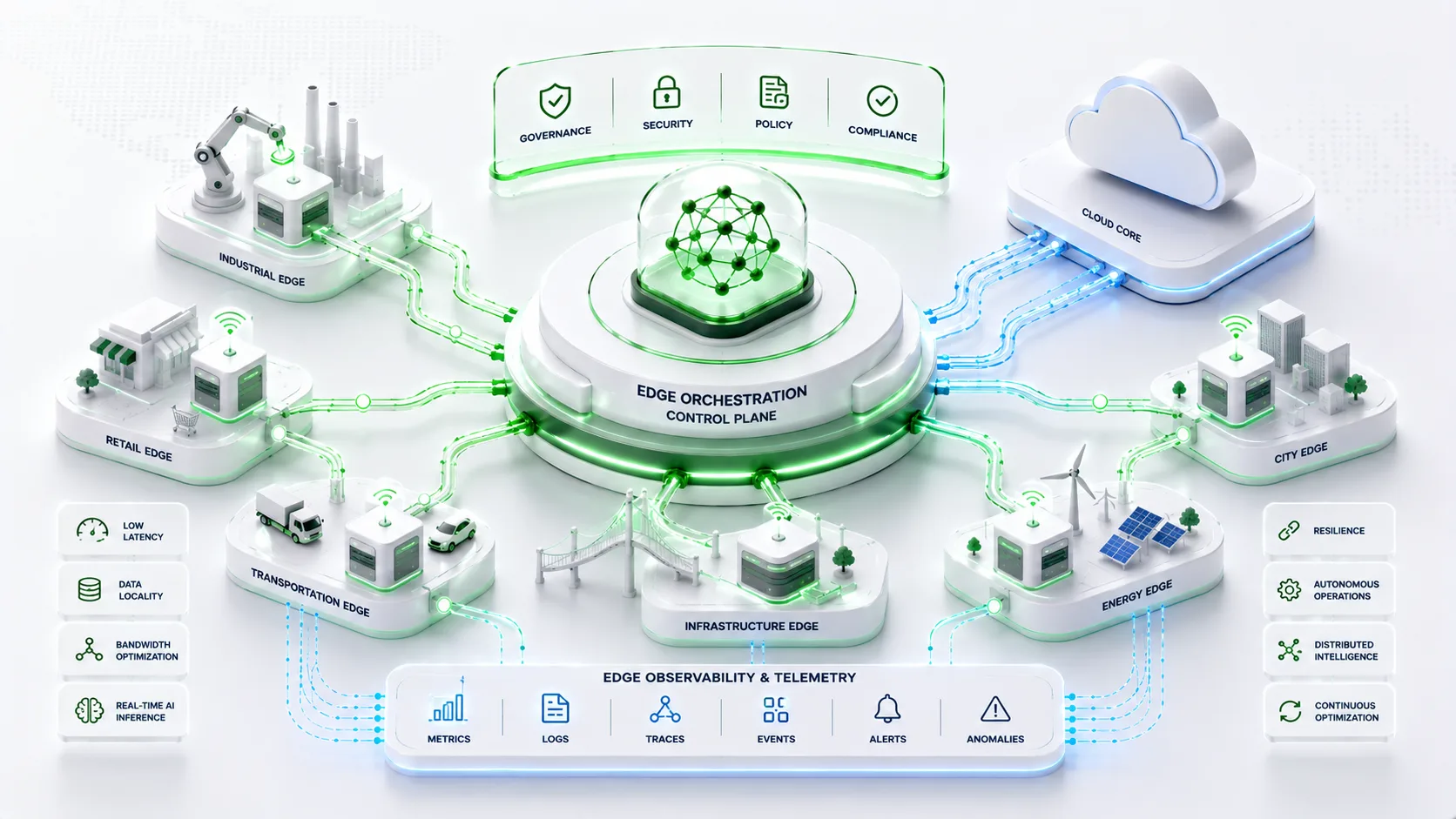
Enterprise Edge Computing refers to distributed infrastructure architecture that processes data, executes applications, and operationalizes intelligence closer to the physical or operational source of data generation.
Instead of routing all workloads through centralized cloud infrastructure, enterprises deploy edge infrastructure across:
- Operational facilities
- Retail environments
- Industrial systems
- Autonomous infrastructure
- Manufacturing plants
- Transportation networks
- Smart operational systems
- AI execution environments
Modern edge computing environments support:
- Real-time AI inference
- Operational telemetry processing
- Autonomous workflow execution
- Distributed orchestration
- Low-latency operational systems
- Edge observability platforms
- Infrastructure resilience
- Runtime operational intelligence
Distributed Intelligence
Process operational data closer to infrastructure environments for real-time responsiveness and scalability.
Low-Latency Operations
Reduce operational delays by executing workloads directly at distributed infrastructure layers.
Autonomous Infrastructure
Enable intelligent operational systems capable of autonomous coordination and localized decision execution.
Why Enterprise Edge Computing Matters in 2026
Modern enterprise environments generate unprecedented volumes of operational data.
This includes:
- AI telemetry streams
- Operational sensor data
- Infrastructure monitoring systems
- Distributed workflow signals
- Real-time operational intelligence
- Autonomous orchestration events
- Infrastructure health telemetry
- Runtime execution metrics
Centralized cloud-only infrastructure cannot always support:
- Ultra-low latency requirements
- Bandwidth optimization
- Real-time AI inference
- Autonomous operational systems
- Resilient local processing
- Operational continuity at scale
The AI Infrastructure Shift
The rapid growth of Edge AI is accelerating enterprise adoption of distributed operational infrastructure.
Organizations increasingly deploy:
- Edge inference systems
- Localized AI orchestration
- Operational telemetry processing
- Distributed runtime governance
- Autonomous workflow coordination
Edge infrastructure is becoming foundational for operational AI systems that require real-time responsiveness and distributed intelligence execution.
Core Components of Enterprise Edge Architecture
1. Distributed Edge Infrastructure
Modern edge platforms include:
- Localized compute infrastructure
- Cloud-native edge nodes
- Operational AI execution layers
- Edge orchestration systems
- Distributed runtime platforms
2. Edge AI and Operational Intelligence
Enterprises operationalize:
- AI inference at the edge
- Localized telemetry processing
- Autonomous decision systems
- Operational analytics routing
- Real-time intelligence execution
3. Edge Orchestration Systems
Distributed edge environments require:
- Cloud-native orchestration
- Runtime governance
- Infrastructure observability
- Operational failover systems
- Resilience-aware coordination
Localized Operational Intelligence
Execute AI inference and operational intelligence directly within distributed infrastructure environments.
Distributed Infrastructure Coordination
Coordinate edge infrastructure environments through resilient orchestration systems and cloud-native operational automation.
Enterprise Use Cases for Edge Computing
Smart Manufacturing
Manufacturing environments operationalize:
- Real-time operational monitoring
- Autonomous maintenance systems
- AI-driven production analytics
- Industrial telemetry processing
- Distributed operational resilience
Retail Infrastructure Intelligence
Retail enterprises deploy:
- Localized operational analytics
- Smart inventory systems
- Real-time customer intelligence
- Autonomous checkout systems
- Distributed edge AI environments
Logistics and Transportation
Edge infrastructure enables:
- Fleet telemetry processing
- Real-time routing intelligence
- Autonomous operational systems
- Distributed logistics orchestration
- Infrastructure continuity systems
Enterprise Architecture Perspective
Edge Computing should not be treated as isolated infrastructure expansion. It must be operationalized as part of a broader distributed enterprise architecture strategy.
Modern edge architecture requires:
Enterprise Edge Architecture Principles
- Cloud-edge operational coordination
- Distributed runtime governance
- Observability-first infrastructure
- AI-native operational systems
- Resilience-aware orchestration
- Operational telemetry visibility
- Localized AI execution
- Scalable distributed automation
The enterprises leading edge transformation are building unified distributed infrastructure ecosystems rather than disconnected edge deployments.
Operational Challenges Enterprises Face
Infrastructure Fragmentation
Distributed environments increase complexity across:
- Operational visibility
- Runtime governance
- Infrastructure coordination
- Edge orchestration
Security and Governance Risks
Edge environments require:
- Distributed security controls
- Runtime governance systems
- Operational telemetry visibility
- Infrastructure policy enforcement
Operational Resilience
Distributed systems must maintain operational continuity despite:
- Connectivity disruption
- Infrastructure instability
- Distributed orchestration failures
- Autonomous workflow interruptions
Technology Insight
The future of enterprise infrastructure is distributed, telemetry-aware, AI-native, and operationally autonomous.
Implementation Checklist
Enterprise Edge Computing Checklist
- Deploy distributed edge infrastructure
- Operationalize localized AI inference
- Implement edge observability systems
- Deploy distributed orchestration platforms
- Standardize edge governance controls
- Implement runtime telemetry visibility
- Operationalize resilience-aware automation
- Deploy edge operational intelligence systems
- Integrate cloud-edge orchestration
- Implement operational failover systems
- Deploy AI-native runtime environments
- Standardize distributed infrastructure coordination
Common Mistakes Enterprises Make
Treating Edge as an Isolated Technology
Edge infrastructure must integrate directly with cloud-native operational systems and enterprise orchestration architecture.
Ignoring Operational Observability
Distributed infrastructure environments require continuous telemetry visibility and operational governance.
Underestimating Edge Governance Complexity
Distributed environments dramatically increase governance and operational coordination requirements.
The enterprises that operationalize distributed intelligence effectively will define the next generation of enterprise infrastructure.
Key Takeaways
Enterprise Infrastructure Is Becoming Distributed
Modern operational systems increasingly require localized intelligence execution and edge-native infrastructure coordination.
Edge AI Is Accelerating Infrastructure Transformation
Real-time AI inference and telemetry systems are driving enterprise adoption of distributed operational platforms.
Operational Resilience Depends on Distributed Coordination
Modern edge infrastructure requires orchestration, governance, observability, and resilient runtime operational systems.
How YggyTech Helps
YggyTech helps enterprises operationalize distributed edge infrastructure through cloud-native orchestration, edge AI platforms, runtime governance systems, observability integration, and resilient operational automation.
Our teams support:
- Enterprise edge architecture
- Distributed AI infrastructure
- Operational edge orchestration
- Runtime governance systems
- Edge observability integration
- Cloud-edge operational coordination
- Operational resilience engineering
- AI-native infrastructure modernization
Build Distributed Enterprise Infrastructure with YggyTech
YggyTech helps organizations operationalize scalable edge computing infrastructure through AI-native architecture, distributed orchestration, and resilient operational modernization.
Schedule an Edge Infrastructure ConsultationFAQs
What is Enterprise Edge Computing?
Enterprise Edge Computing is distributed infrastructure architecture that processes workloads and operational intelligence closer to where data is generated.
Why is Edge Computing important in 2026?
Modern enterprises require low-latency operational systems, real-time AI inference, distributed orchestration, and resilient infrastructure coordination that centralized cloud-only environments cannot always provide efficiently.
What industries benefit from Enterprise Edge Computing?
Industries including manufacturing, logistics, healthcare, retail, transportation, and autonomous operational environments benefit significantly from distributed edge infrastructure.
What technologies are commonly used in edge computing environments?
Organizations commonly use cloud-native orchestration platforms, Kubernetes, observability systems, edge AI infrastructure, runtime governance tooling, and distributed telemetry systems.
How does YggyTech help enterprises operationalize edge infrastructure?
YggyTech helps organizations deploy distributed edge architecture through operational orchestration, AI-native infrastructure, runtime governance systems, and cloud-edge operational modernization.

Sarah Anderson
Head of Content
Sarah leads the content strategy at Yggy Tech, bringing 10+ years of experience in technology writing and editorial direction.