Platform Engineering for Autonomous AI Workflows
Enterprise AI systems are rapidly evolving from isolated automation tools into autonomous operational infrastructure capable of orchestrating workflows, coordinating decisions, managing infrastructure operations, and executing intelligent business processes across distributed environments.
As organizations operationalize autonomous AI at scale, infrastructure complexity is increasing dramatically. In 2026, Platform Engineering is becoming the foundational operational discipline enabling scalable, governed, and resilient AI workflow systems across modern enterprise environments.
The future of enterprise AI operations depends less on individual models and more on scalable platform infrastructure capable of orchestrating autonomous workflows safely, reliably, and continuously.
What Is Platform Engineering for Autonomous AI Workflows?
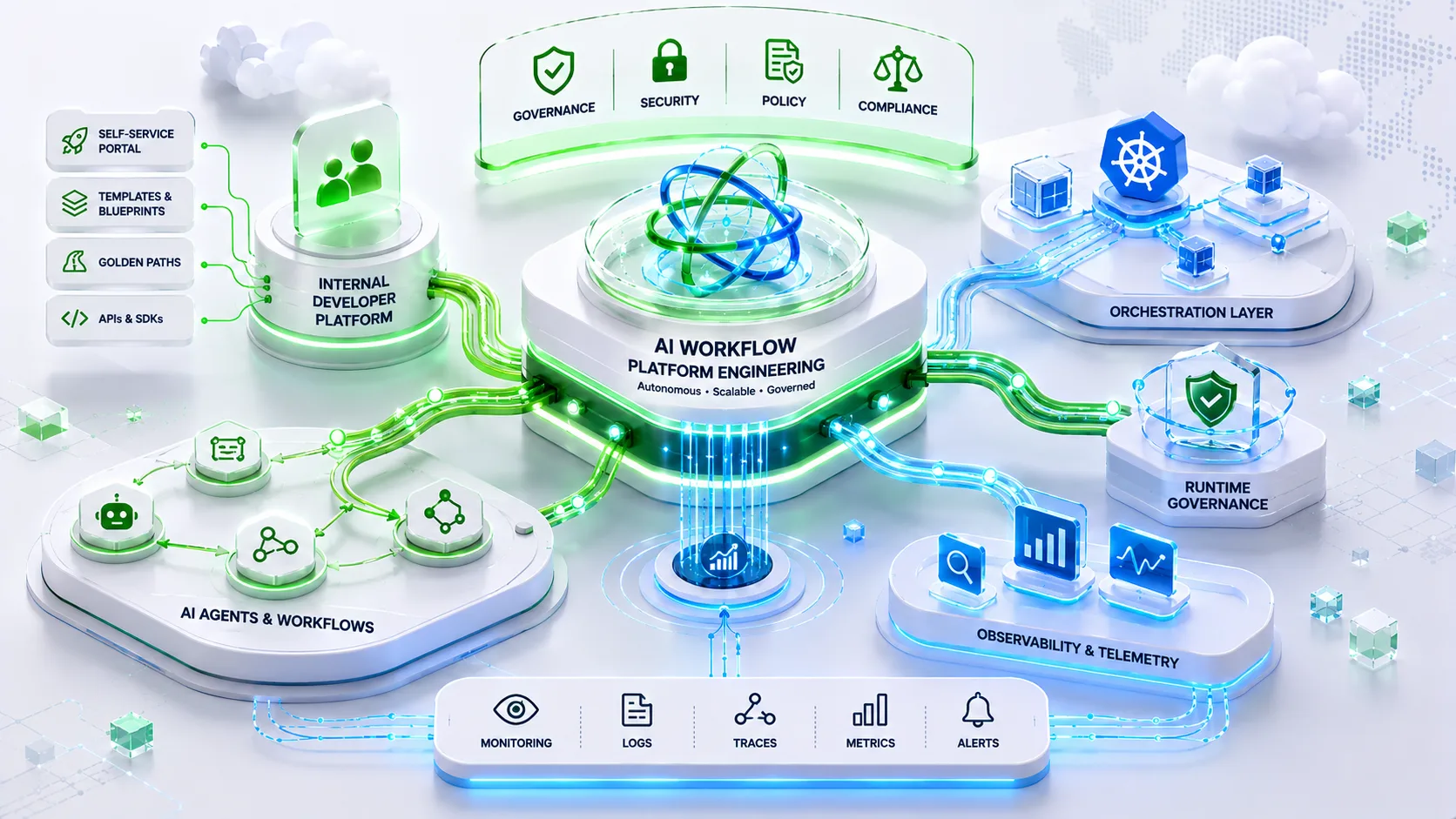
Platform Engineering for Autonomous AI Workflows refers to the operational discipline of building Internal Developer Platforms, orchestration systems, runtime governance infrastructure, and self-service operational tooling that enable enterprises to deploy and manage scalable AI workflow environments.
Modern AI workflow platforms coordinate:
- Autonomous orchestration systems
- Runtime governance infrastructure
- Operational AI routing
- Telemetry-aware execution layers
- AI workflow coordination
- Infrastructure automation systems
- Distributed operational intelligence
- Cloud-native AI infrastructure
Platform Engineering transforms AI workflows from fragmented automation systems into scalable operational infrastructure.
Self-Service AI Operations
Enable teams to operationalize autonomous workflows using governed platform systems and standardized orchestration pathways.
Operational AI Orchestration
Coordinate distributed AI execution systems, runtime governance layers, and scalable orchestration infrastructure.
Governed AI Infrastructure
Embed governance, observability, telemetry, and operational controls directly into AI workflow systems.
Why Autonomous AI Workflows Require Platform Engineering
Enterprise AI workflow environments now include:
- Distributed AI agents
- Cloud-native orchestration systems
- Runtime telemetry platforms
- Infrastructure governance layers
- Operational intelligence routing
- Multi-agent workflow coordination
- AI runtime execution systems
- Autonomous operational infrastructure
Without platform standardization, organizations experience:
- Workflow fragmentation
- Infrastructure inconsistency
- Operational visibility gaps
- Governance drift
- AI orchestration instability
- Scaling bottlenecks
The Autonomous Workflow Complexity Problem
As autonomous AI systems scale, infrastructure coordination becomes significantly more complex.
Organizations must coordinate:
- Workflow execution systems
- Infrastructure orchestration
- AI governance controls
- Runtime telemetry visibility
- Operational recovery systems
- Distributed AI coordination
Platform Engineering provides the operational abstraction layer required to scale autonomous AI workflows safely and efficiently.
Core Components of AI Workflow Platform Architecture
1. Internal Developer Platforms
Internal Developer Platforms enable:
- Self-service AI workflow deployment
- Infrastructure standardization
- Operational automation
- Governed orchestration systems
- Runtime infrastructure coordination
2. AI Orchestration Infrastructure
Autonomous workflow systems require:
- Distributed orchestration layers
- Workflow-routing systems
- AI execution coordination
- Infrastructure scheduling systems
- Runtime recovery pathways
3. Runtime Governance Systems
Modern AI platforms embed:
- Policy enforcement systems
- Operational visibility controls
- Governance checkpoints
- AI observability systems
- Infrastructure compliance layers
Operational AI Coordination
Coordinate autonomous AI execution systems, workflow orchestration layers, and operational governance infrastructure continuously.
Scalable Workflow Infrastructure
Enable governed AI workflow deployment through Internal Developer Platforms and standardized orchestration systems.
Enterprise Use Cases for Autonomous Workflow Platforms
AI Operations Platforms
Platform Engineering supports:
- Inference orchestration
- Workflow scheduling
- Operational telemetry coordination
- Distributed runtime execution
- Infrastructure governance
Autonomous AI Agents
AI workflow platforms enable:
- Multi-agent coordination
- Runtime execution governance
- Operational workflow routing
- Infrastructure failover orchestration
- AI execution visibility
Enterprise Operational Automation
Organizations operationalize:
- Infrastructure automation workflows
- Operational AI routing systems
- Governed escalation pathways
- Runtime orchestration systems
- Distributed operational intelligence
Enterprise Architecture Perspective
Autonomous AI workflows should be treated as enterprise operational infrastructure rather than isolated automation systems.
Modern AI workflow platform architecture should include:
AI Workflow Platform Architecture Principles
- Self-service AI operational systems
- Runtime governance integration
- Observability-first infrastructure
- Distributed orchestration systems
- Operational telemetry visibility
- Infrastructure automation layers
- Resilient workflow coordination
- Cloud-native AI operationalization
The most mature enterprises are embedding AI orchestration, governance, telemetry, and operational recovery systems directly into platform infrastructure.
Operational Challenges Enterprises Face
Workflow Fragmentation
Disconnected orchestration systems reduce:
- Operational visibility
- Governance consistency
- Runtime coordination
- Workflow reliability
Infrastructure Complexity
Autonomous AI environments increase complexity across:
- Cloud infrastructure
- AI orchestration systems
- Telemetry pipelines
- Runtime execution layers
- Governance infrastructure
Operational Governance Gaps
AI workflow systems require:
- Runtime policy enforcement
- Operational visibility systems
- Escalation coordination
- AI governance controls
- Continuous orchestration monitoring
Platform Engineering Insight
Autonomous AI systems become operationally scalable only when enterprises standardize orchestration, governance, observability, and infrastructure coordination through platform architecture.
Implementation Checklist
AI Workflow Platform Engineering Checklist
- Deploy Internal Developer Platforms
- Standardize AI workflow orchestration
- Implement runtime governance systems
- Deploy telemetry visibility infrastructure
- Operationalize AI observability systems
- Standardize workflow deployment models
- Deploy orchestration recovery pathways
- Integrate infrastructure automation systems
- Implement governance-aware routing
- Operationalize self-service AI infrastructure
- Deploy resilient workflow coordination systems
- Implement observability-first platform infrastructure
Common Mistakes Enterprises Make
Treating AI Workflows as Isolated Automation
Autonomous AI systems require scalable operational infrastructure and governance-aware orchestration systems.
Ignoring Runtime Governance
Uncontrolled AI execution environments increase operational and governance risk dramatically.
Fragmented Platform Infrastructure
Disconnected orchestration systems reduce workflow reliability and operational scalability.
The future of enterprise AI operations belongs to organizations that operationalize autonomous workflows through scalable platform infrastructure.
Key Takeaways
Platform Engineering Enables AI Scalability
Standardized orchestration systems and self-service infrastructure enable scalable autonomous AI operations.
Governance Is Becoming Infrastructure-Native
Modern AI workflow platforms embed governance, telemetry, observability, and operational controls directly into infrastructure systems.
Autonomous AI Requires Operational Coordination
Distributed AI workflows require resilient orchestration infrastructure and platform-driven operational standardization.
How YggyTech Helps
YggyTech helps enterprises operationalize autonomous AI workflows through Platform Engineering modernization, orchestration infrastructure, runtime governance systems, observability platforms, and scalable AI operational architecture.
Our teams support:
- AI workflow platform architecture
- Internal Developer Platform implementation
- AI orchestration systems
- Runtime governance infrastructure
- Operational telemetry systems
- Cloud-native AI operationalization
- Platform observability integration
- Enterprise AI infrastructure modernization
Build Scalable Autonomous AI Platforms with YggyTech
YggyTech helps organizations operationalize autonomous AI workflows through scalable platform engineering, orchestration systems, governance infrastructure, and cloud-native AI modernization.
Schedule an AI Platform Engineering ConsultationFAQs
What is Platform Engineering for Autonomous AI Workflows?
It is the discipline of building scalable Internal Developer Platforms, orchestration systems, and governance infrastructure that operationalize autonomous AI workflows safely and efficiently.
Why do autonomous AI systems require Platform Engineering?
Autonomous AI systems introduce significant operational complexity requiring scalable orchestration, governance, observability, and infrastructure standardization.
What technologies support AI workflow platforms?
Organizations commonly use Kubernetes, orchestration engines, observability platforms, runtime governance systems, Internal Developer Platforms, and cloud-native automation tooling.
What are the biggest challenges in autonomous AI workflow infrastructure?
Key challenges include orchestration complexity, governance visibility, workflow reliability, infrastructure fragmentation, and runtime operational coordination.
How does YggyTech help enterprises operationalize autonomous AI platforms?
YggyTech helps organizations deploy scalable AI workflow infrastructure through Platform Engineering modernization, orchestration systems, observability integration, runtime governance, and cloud-native AI operationalization.

Ava Mitchell
UX & Digital Experience Strategist
Ava combines product psychology, interface systems, and user-centered design to create digital experiences that feel intuitive and scalable. Her work at YGGY Tech focuses on high-conversion UX systems, enterprise interfaces, and design-driven growth.